
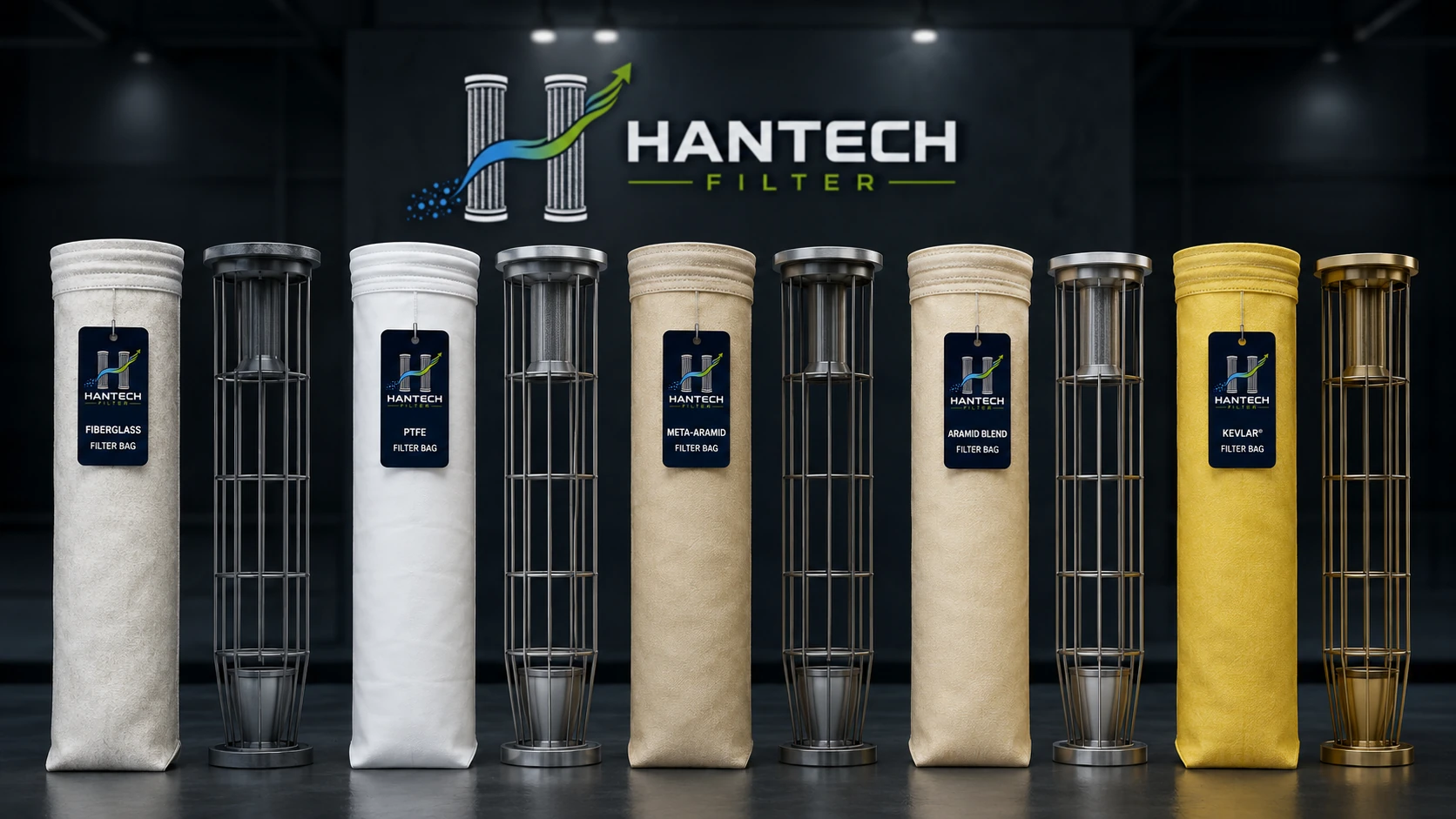
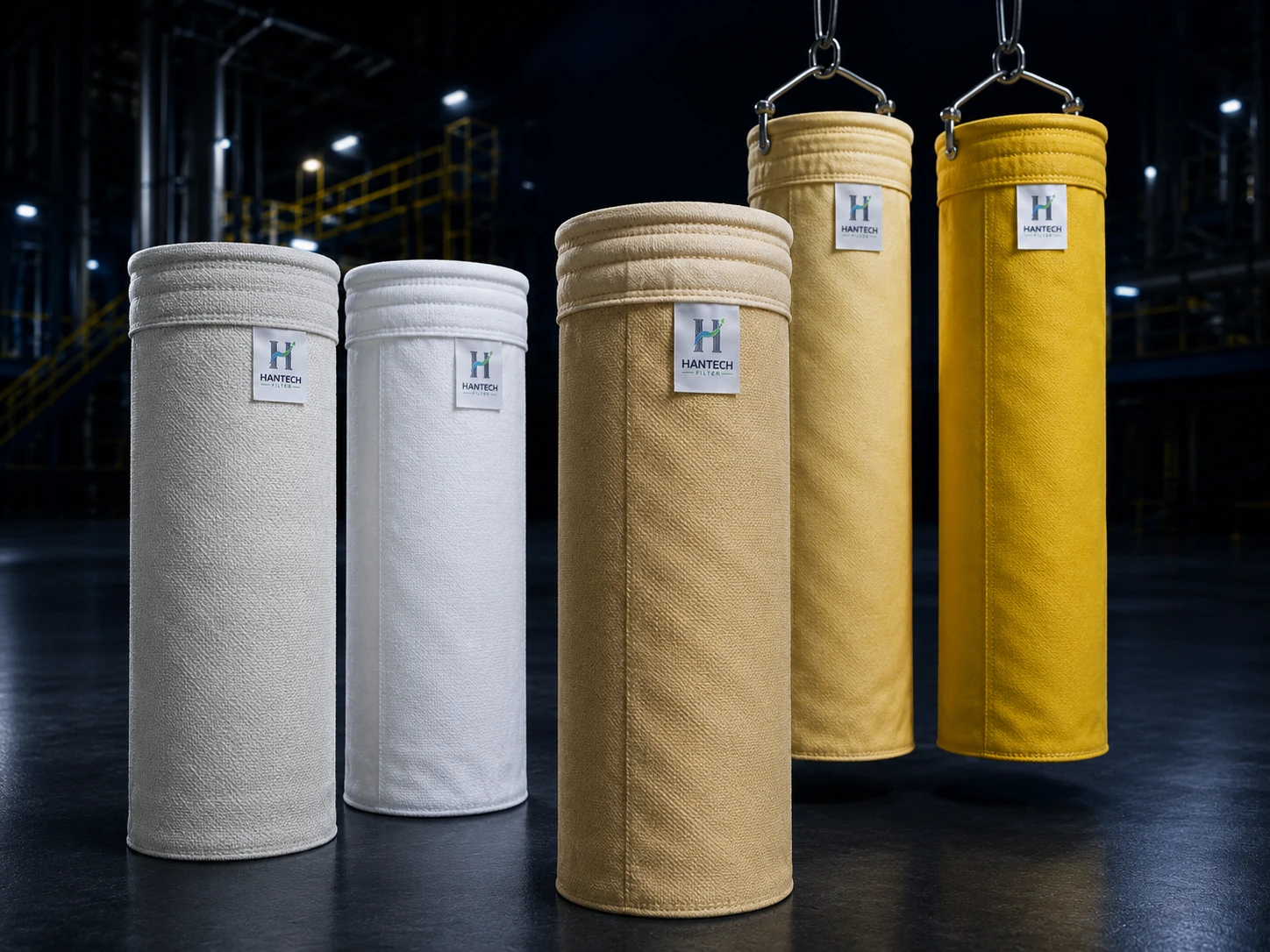
Aramid / Nomex filter bag is selected for hot pulse-jet processes by jointly evaluating mechanical strength, acidic moisture risk, oily/dusty gas, and economical alternatives.
What Is Aramid Nomex Filter Bag?
Aramid / Nomex filter bags are a meta-aramid media family used in hot pulse-jet applications that exceed polyester/PES temperature limits. They can be a candidate for asphalt plants, hot mineral drying lines, foundries, metallurgy and certain process filters; however, if acidic moisture, oily gas and incorrect pulse settings are not accounted for, rapid aging can occur.
The values shown are general references for technical selection. Hantech Filter defines the scope of media selection for the process conditions, dimensional and construction checks, verified sourcing and site application support. Final limits must be verified against the manufacturer's data sheet and actual process records.
In Which Processes Is It Considered?
| It's a must. | Aramid comment | Hantech decision |
|---|---|---|
| 180–200°C hot process | Aramid can be a strong candidate in terms of mechanical strength and temperature resistance. | Normal/peak temperature, duration, and start-stop behavior are verified against the datasheet. |
| Asphalt plant / dryer gas | Oily components and hot spikes can be critical in the selection. | Fuel/process type, oil/aerosol, dP trend, and finish requirement are requested. |
| Acidic moisture or dew point | Aging risk can become significant for aramid. | SOx/SO3, NOx/NO2, moisture, dew point, and HCl/HF are evaluated together. |
| Very fine dust + low emission target | Standard felt may not be sufficient. | Membrane/surface finish, A/C ratio, and cleaning regime are compared with justification. |
| PES/PPS-adequate process | Aramid may be an unnecessary cost. | Aramid is not automatically recommended if a more economical media meets the requirement safely. |
Temperature, Acidic Moisture, and Aging Risk
For aramid, the 180–200°C band can be read as a preliminary selection range; a short peak of around 220°C is evaluated together with peak duration, frequency, moisture, and gas chemistry. Acidic moisture and dew-point risk can dramatically affect aramid service life, so the decision should never be made on the temperature rating alone.
Example of field diagnostics
- Process
- Asphalt plant baghouse filter
- Symptom
- dP stable after new bags; brittleness and deformation around the neck within 2–3 months
- Control
- Peak temperature records, fuel-derived acidic components, oil/aerosol, pulse pressure, and cage burrs are examined together.
- Comment
- The problem may not just be “aramid quality” — process chemistry and the cleaning regime determine bag life.
Comparing Aramid, PPS, and P84
| Media | Strong side | Critical risk | Hantech comment |
|---|---|---|---|
| PES | Economical, medium temperature | Above 140°C and humidity | If conditions allow, moving up to aramid may be unnecessary. |
| PPS | Chemistry/moisture balance | O₂ / oxidation | If O₂ is low and the chemistry is favorable, aramid can be an alternative. |
| Aramid | Hot process conditions and mechanical strength | Acidic moisture, oily gas, and spikes | Process gas conditions are assessed together with temperature. |
| P84 | High temperature and filtration performance | Cost and chemical limits | Compared on a justified basis for fine dust/low emission targets. |
| PTFE | Chemical resistance | Cost + mechanical support | It is not always the economically correct answer. |
I Would Not Choose Aramid Under These Conditions
Hantech's approach is not to make aramid the automatic answer at high temperature. If actual process data shows a more economical media is safe, we recommend that; if aramid is genuinely needed, we recommend it together with the appropriate finish, cage, and cleaning conditions.
Information Required for a Quote
Minimum data set for a quote: normal/peak temperature and peak durations, fuel/process type, SOx/SO3, NOx/NO2, HCl/HF, humidity, dew point, presence of oil/aerosol, dust type/particle size/abrasiveness/stickiness, filter bag diameter/length/quantity, top/bottom construction, snap-band, cage OD/venturi, pulse pressure, dP trend, current filter bag service life, and failure photos.
You can send this information via the Aramid Nomex filter bag technical quote form. For the general product family, review the filter bags by process condition, including aramid page.
Related Technical Guides
To clarify the decision, you can read the meta-aramid / Nomex filter bag selection guide, the PPS filter bag comparison, the P84 filter bag guide, and how to choose a filter bag together.
Frequently Asked Questions
At what temperature is Aramid / Nomex filter bag used?
For preliminary selection, a 180-200°C range and approximately 220°C short peaks can be taken as a basis; the actual limit must be verified against the manufacturer's datasheet, peak duration, humidity, gas chemistry, and application conditions.
Is aramid safe in acidic moisture?
Acidic moisture and dew point are a critical risk for aramid. A safe decision should not be made without verifying SOx/NOx/HCl/HF, moisture, and process temperature together.
Can PPS be selected instead of aramid?
PPS may make more sense under certain chemical/moisture conditions; however, O₂/oxidation risk is also a gating factor in the PPS decision. Hantech compares the two media using process data.