
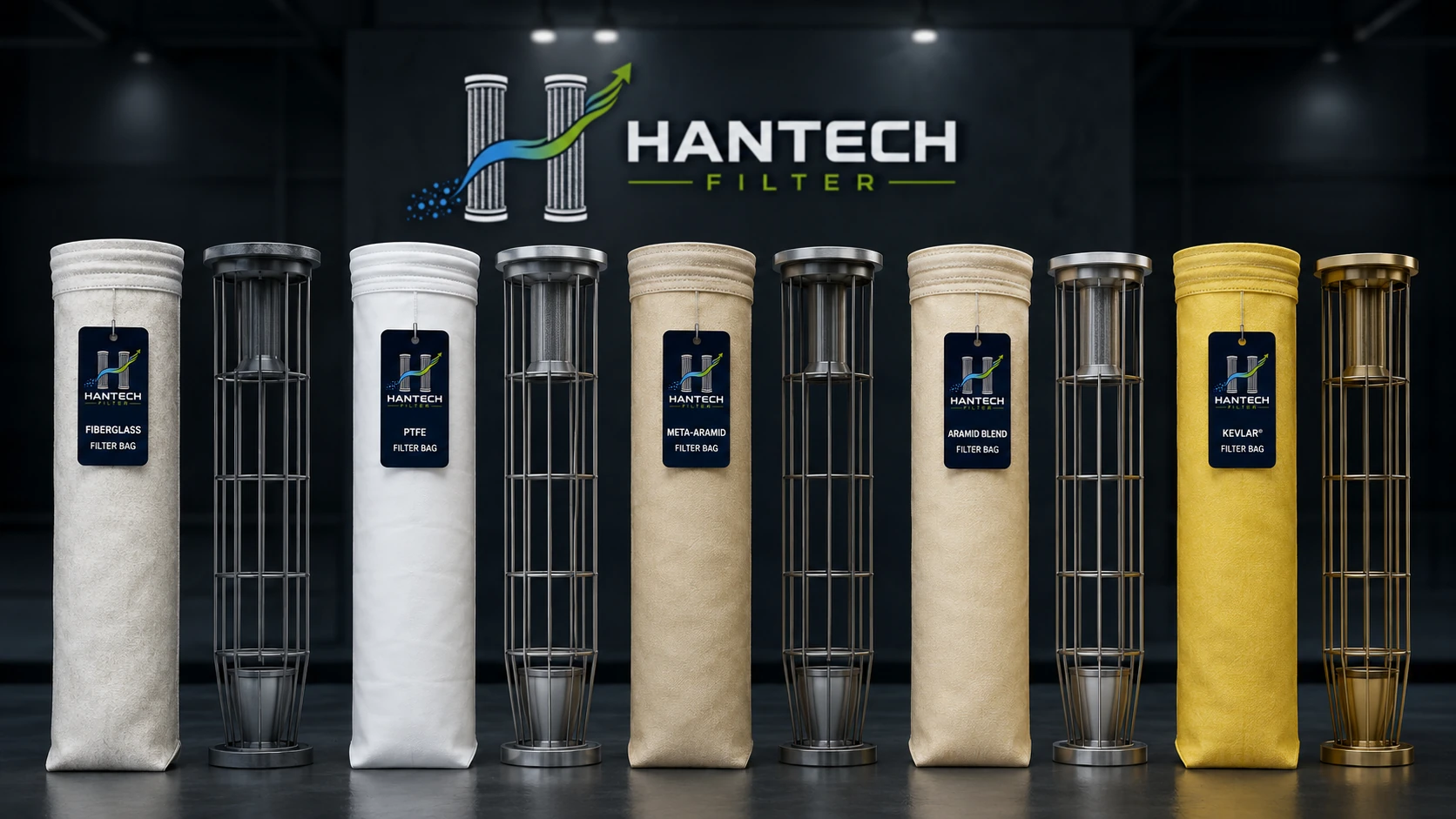
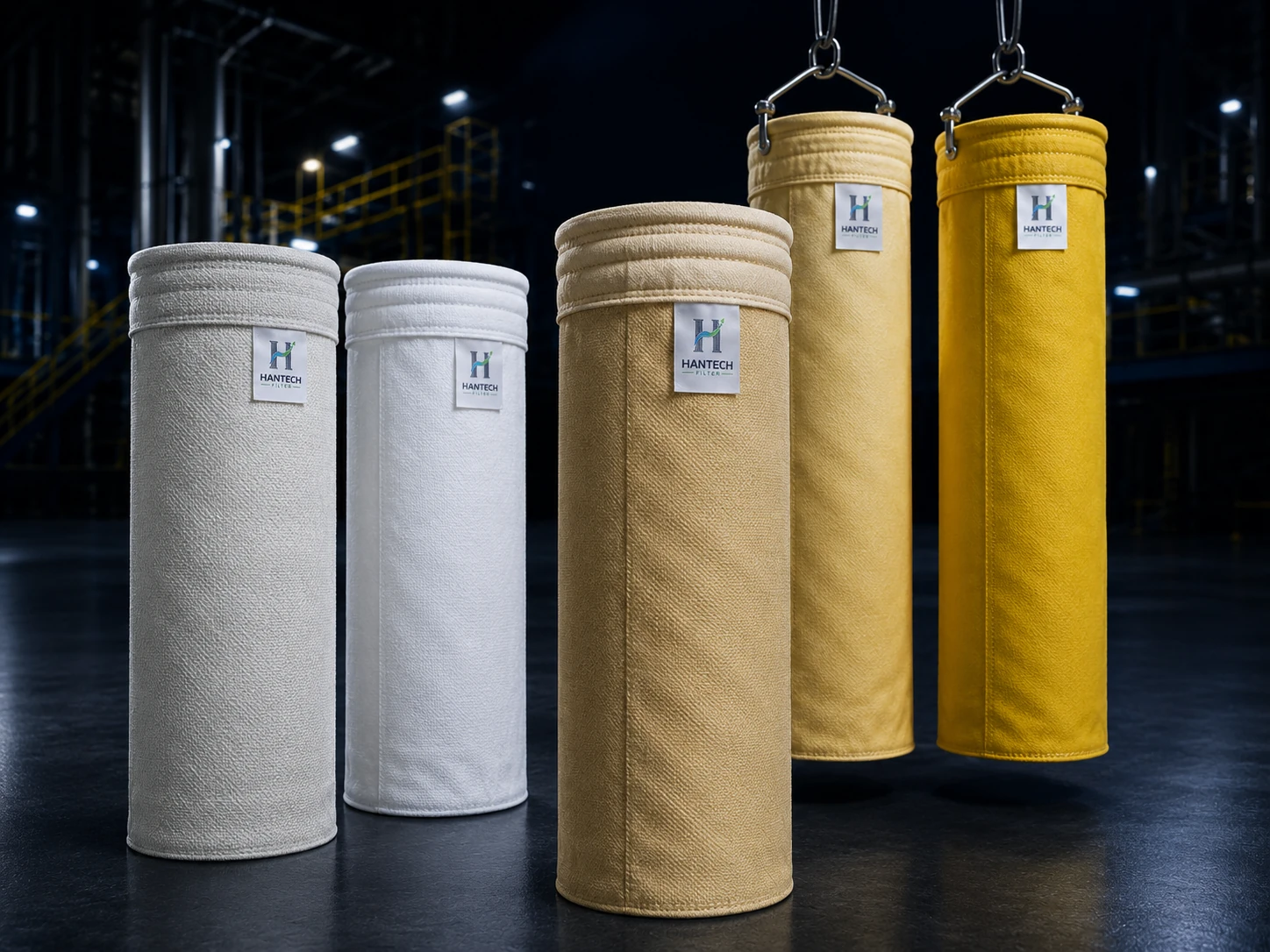
Fiberglass filter bag is a strong candidate where high temperature and dimensional stability are required. However, it cannot be considered a safe choice until fragility, cage surface, pulse pressure, packaging, and installation standards are verified.
What Is Fiberglass Filter Bag?
Fiberglass filter bags are a fiberglass media family considered where dimensional stability at high temperature and durability in mineral/dust processes are required. In cement, lime, gypsum, hot mineral, foundry and certain power plant applications, they are compared alongside P84, Aramid, PTFE or fiberglass PTFE/ePTFE options.
The values shown are general references for technical selection. Hantech Filter assesses fiberglass suitability using process data and defines the scope of dimensional and construction checks, verified sourcing and site application support. Actual limits must be verified against the manufacturer's data sheet and site records.
In Which Processes Is It Considered?
| It's a must. | Glass fiber interpretation | Hantech decision |
|---|---|---|
| 240–260°C hot-gas preliminary selection range | Fiberglass can be a candidate at high temperature; peaks are verified against the media construction. | Selection cannot be finalized without normal/peak temperature, peak duration, gas chemistry, and a datasheet. |
| Dry mineral or lime/dust process | Dimensional stability and temperature resistance can provide an advantage. | Abrasiveness, inlet distribution, cage surface, and packaging/installation standards are required. |
| Low-emission + fine-dust target | PTFE coating or ePTFE membrane can be a justified candidate. | The membrane decision is made based on dust micron size, emission target, dP trend, and pulse regime. |
| Burred cage / rough installation | The brittle fiber structure carries a risk of early damage. | The cage, venturi, blow pipe, and installation procedure are corrected first. |
| Lower temperature and mild chemistry | PES/PPS/Aramid can be more economical. | Fiberglass is not selected if it creates unnecessary premium cost and mechanical risk. |
Temperature, Brittleness, and Mechanical Support
For fiberglass, the 240–260°C range should be read only as a preliminary selection basis. The actual continuous and peak limits vary with the woven/felt construction, PTFE coating or membrane, stitching thread, gas chemistry, moisture, acid dew point, bag length, and cage contact surface. In a fiberglass decision, mechanical support is often more critical than the media name.
Example of site control
- Process
- Lime hot gas filter
- Recording
- Normal 240°C, short peak 260°C, localized tearing on older bags and cracking around the bag mouth
- Control
- Cage weld burrs, cage OD, blow pipe alignment, pulse pressure, packaging damage, and installation procedure are examined together.
- Comment
- Fiberglass can be a candidate, but even a new premium bag can fail early if the mechanical root cause is not resolved.
Comparison of Fiberglass, Fiberglass PTFE, P84, and Aramid
| Media | Strong side | Critical risk | Hantech comment |
|---|---|---|---|
| PES | Economical, medium temperature | Above 140°C and humidity | If the temperature is suitable, moving up to fiberglass may be unnecessary. |
| PPS | Chemistry/moisture balance | O₂ / oxidation | At medium-to-high temperatures, it is first compared against process chemistry. |
| Aramid | Hot process conditions and mechanical strength | Acidic humidity | Compared in applications with high brittleness risk. |
| P84 | High temperature + filtration performance | Cost and chemical limits | Can be an alternative for fine dust/low emission targets. |
| Fiberglass PTFE/ePTFE | High temperature + surface filtration | Cage/pulse/installation precision | If fiberglass is required, the need for a finish/membrane is justified separately. |
I Would Not Choose Fiberglass Under These Conditions
Hantech's approach is not to automatically sell fiberglass simply because the temperature is high. Mechanical contact, cage design, and the cleaning regime are made safe first; if conditions allow, fiberglass or PTFE/ePTFE versions are selected on technical grounds.
Information Required for a Quote
Minimum data set for a quote: normal/peak temperature, peak duration and frequency, SOx/SO3, NOx/NO2, HCl, HF, O₂, humidity, dew point, dust type/particle size/abrasiveness/stickiness, flow rate, filter bag diameter/length/quantity, top/bottom construction, snap-band, cage OD/wire count/venturi, pulse pressure, dP trend, emission target, packaging/assembly condition, and current damage photos.
You can send this information via the fiberglass filter bag technical quote form. For the general product family, review the high-temperature filter bags, including fiberglass page.
Related Technical Guides
To clarify the decision, you can read the fiberglass filter bag guide, fiberglass PTFE filter bags, the P84 filter bag comparison, PTFE filter bags, and how to choose a filter bag together.
Frequently Asked Questions
At what temperature is fiberglass filter bag used?
For preliminary selection, a 240-260°C range can be considered; the actual limit must be verified against media construction, finish/membrane, gas chemistry, peak duration, and mechanical support.
Why Does a Fiberglass Bag Break?
A burred cage, incorrect cage diameter, rough installation, crushing, aggressive pulsing, and a misaligned blow pipe can cause premature fiber breakage.
Can P84 or Aramid Be Chosen Instead of Fiberglass?
Yes. Temperature, chemistry, emission target, and mechanical sensitivity are read together to compare P84, aramid, PTFE, or fiberglass PTFE options.