Pre-separation
We aim to reduce dust loading on the next filtration stage by separating the coarse fraction.

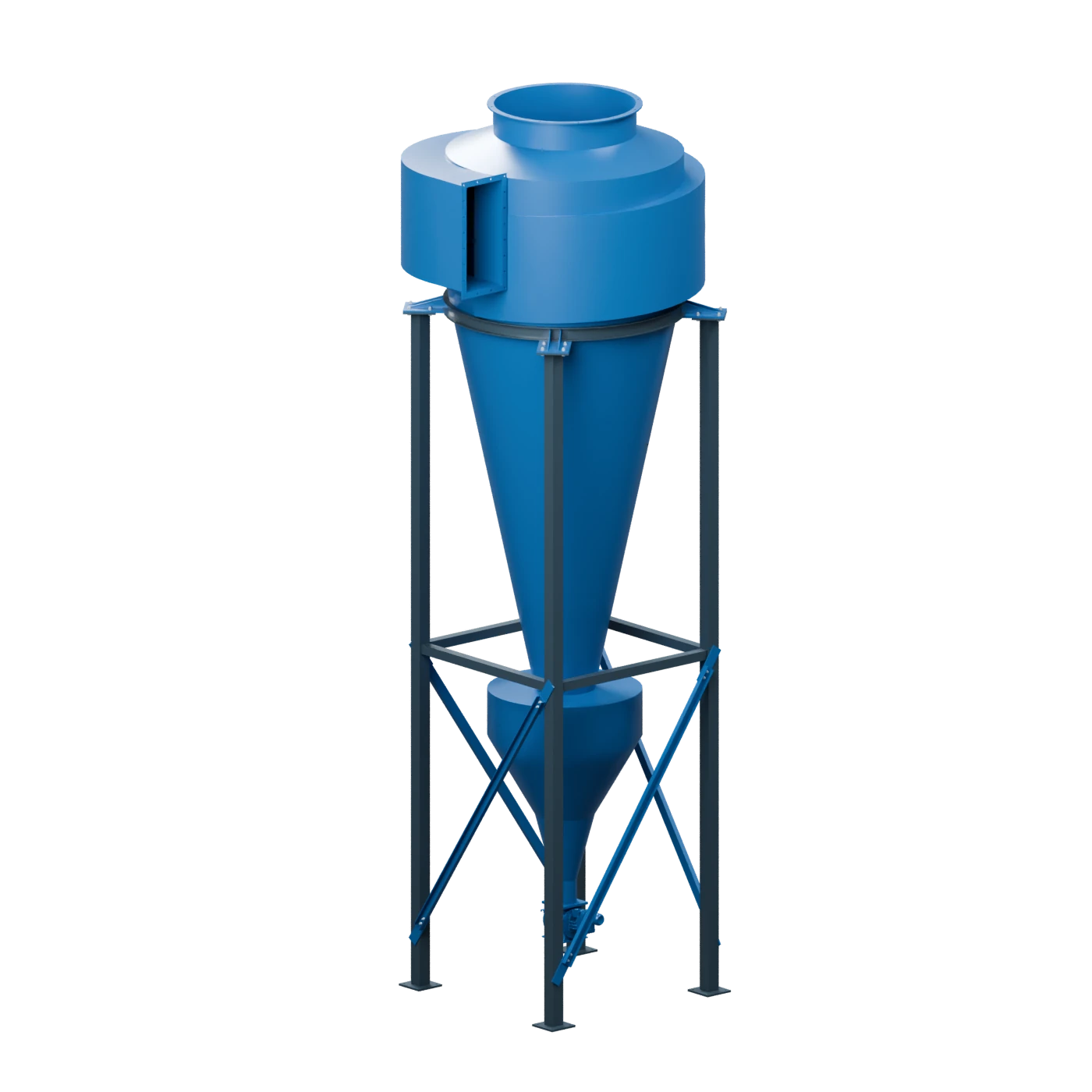
Our cyclone separators are designed for pre-separation, product recovery and reduced coarse-dust loading on downstream filters. Geometry is assessed together with gas flow, particle size distribution and dust properties.
We aim to reduce dust loading on the next filtration stage by separating the coarse fraction.
Returning separated material to the process is evaluated against dust properties and product requirements.
Inlet, casing and discharge are arranged with wear, accumulation and air-leakage risks in mind.
Particle size and density, gas conditions and pressure drop are assessed together; numerical studies and acceptance tests are treated separately.
Separation performance depends on dust properties and operating conditions. The numerical study below is not an efficiency guarantee for the product range.
Watch particles from 5–80 µm move together through the cyclone and descend into the lower hopper. 1,000 particles per size; 15 seconds of numerical tracking in the original 10-second video.
Original numerical recording with Turkish annotations. Colours indicate particle size; the counters show particles currently in the lower hopper. Descent into the hopper is not the same as final collection at the dust outlet.
| Particle diameter | Inside lower hopper* | Collected at dust outlet | Escaped through gas outlet | Total still resident |
|---|---|---|---|---|
| 5 µm | 33.6% | 7.5% | 58.7% | 33.8% |
| 10 µm | 65.8% | 5.9% | 28.3% | 65.8% |
| 20 µm | 92.8% | 1.4% | 0.0% | 98.6% |
| 30 µm | 94.6% | 0.2% | 0.0% | 99.8% |
| 40 µm | 96.4% | 0.0% | 0.0% | 100.0% |
| 50 µm | 96.5% | 0.0% | 0.0% | 100.0% |
| 80 µm | 82.4% | 0.0% | 0.0% | 100.0% |
* Particles in the lower hopper are a subset of total residents; the columns must not be added together. This finite-duration numerical study is not a final collection efficiency or product guarantee.
Archive study: HTF-SIK-0003, mesh3 / LRR, 1,463,852 cells. One-way dilute spherical-particle tracking in a frozen gas field taken at 2,000 iterations. The gas field and result magnitudes remain mesh/model-sensitive. Particle density and wall interactions are assumed and have not been experimentally calibrated. No overall efficiency was calculated without an actual particle size distribution. The research geometry differs from the product design illustrated above.
Inlet dimensions, the volute and internal guide are assessed against gas flow, velocity and abrasion conditions.
The lower collection chamber and rotary airlock connection are arranged with air leakage, dust accumulation and maintenance access in mind.
The cyclone, filter and fan are selected as separate units. Duct routing and connections are engineered for the actual site layout.
 Product
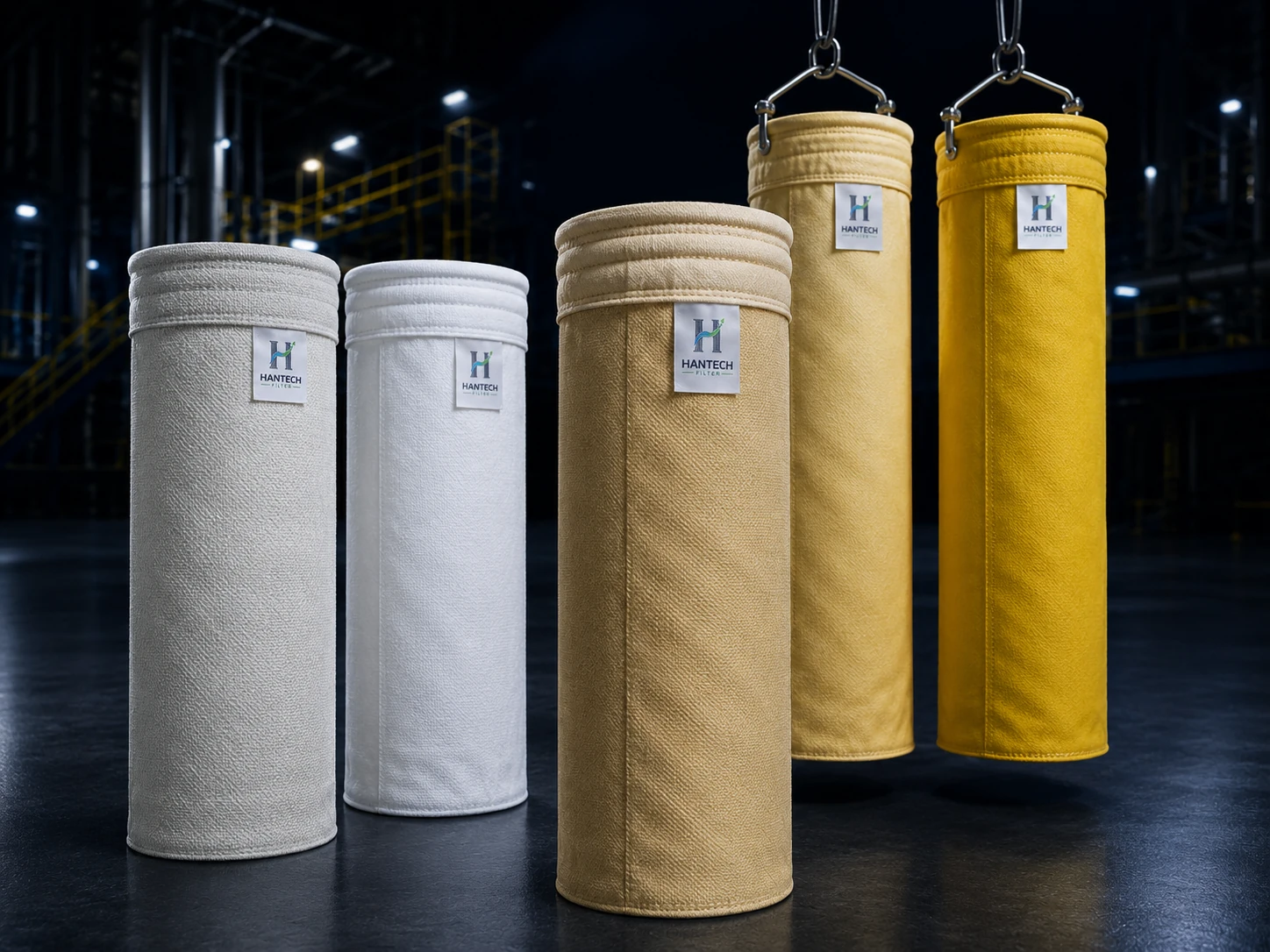
Polyester, PP, acrylic, PPS, aramid, P84, PTFE, fiberglass, antistatic, and ePTFE membrane filter bag options.
Explore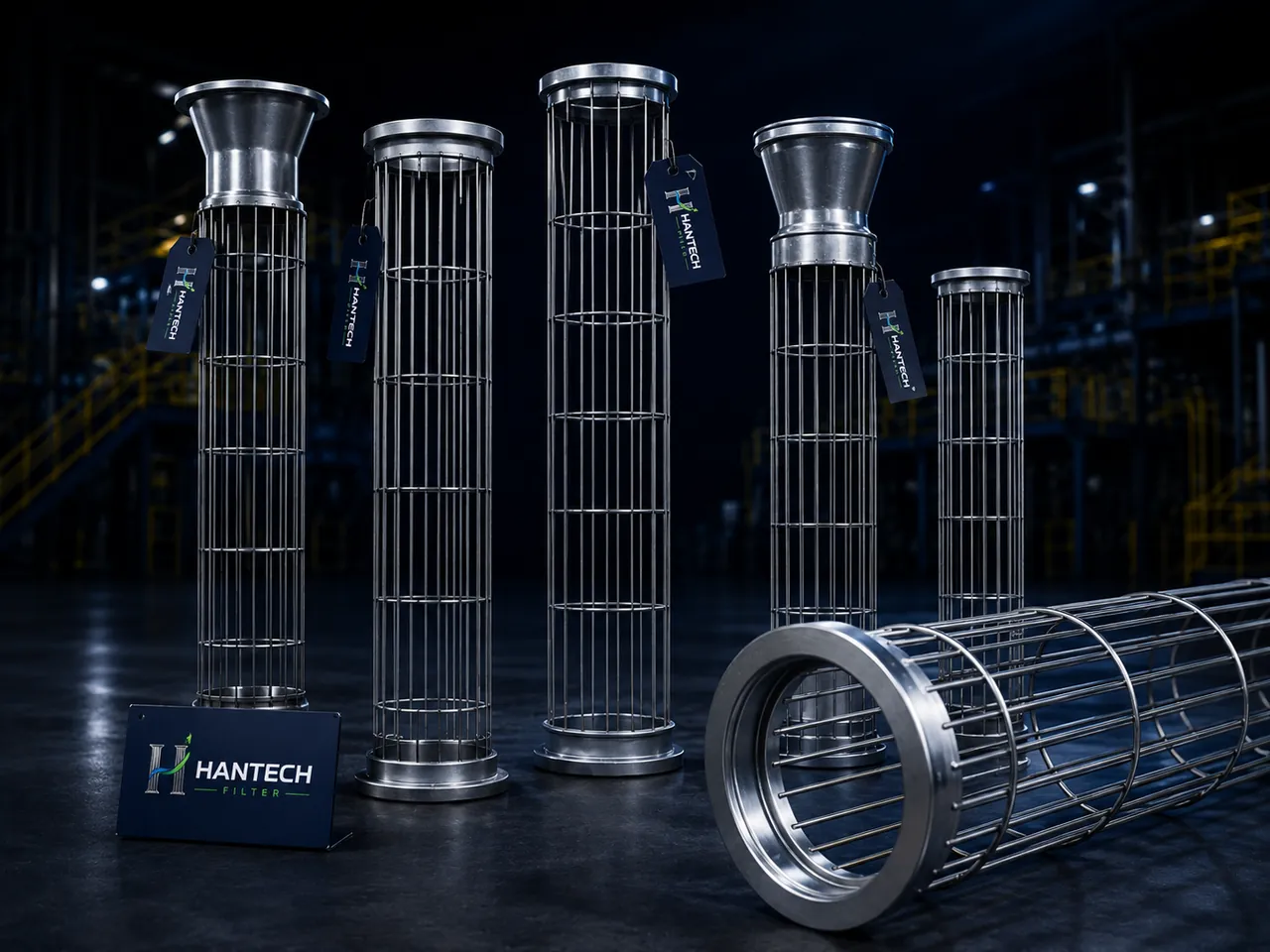 Product
Filter cage, bag cage, cataphoresis-coated cage, silicone-coated cage, SS304 venturi cage, and membrane-compatible cages.
Explore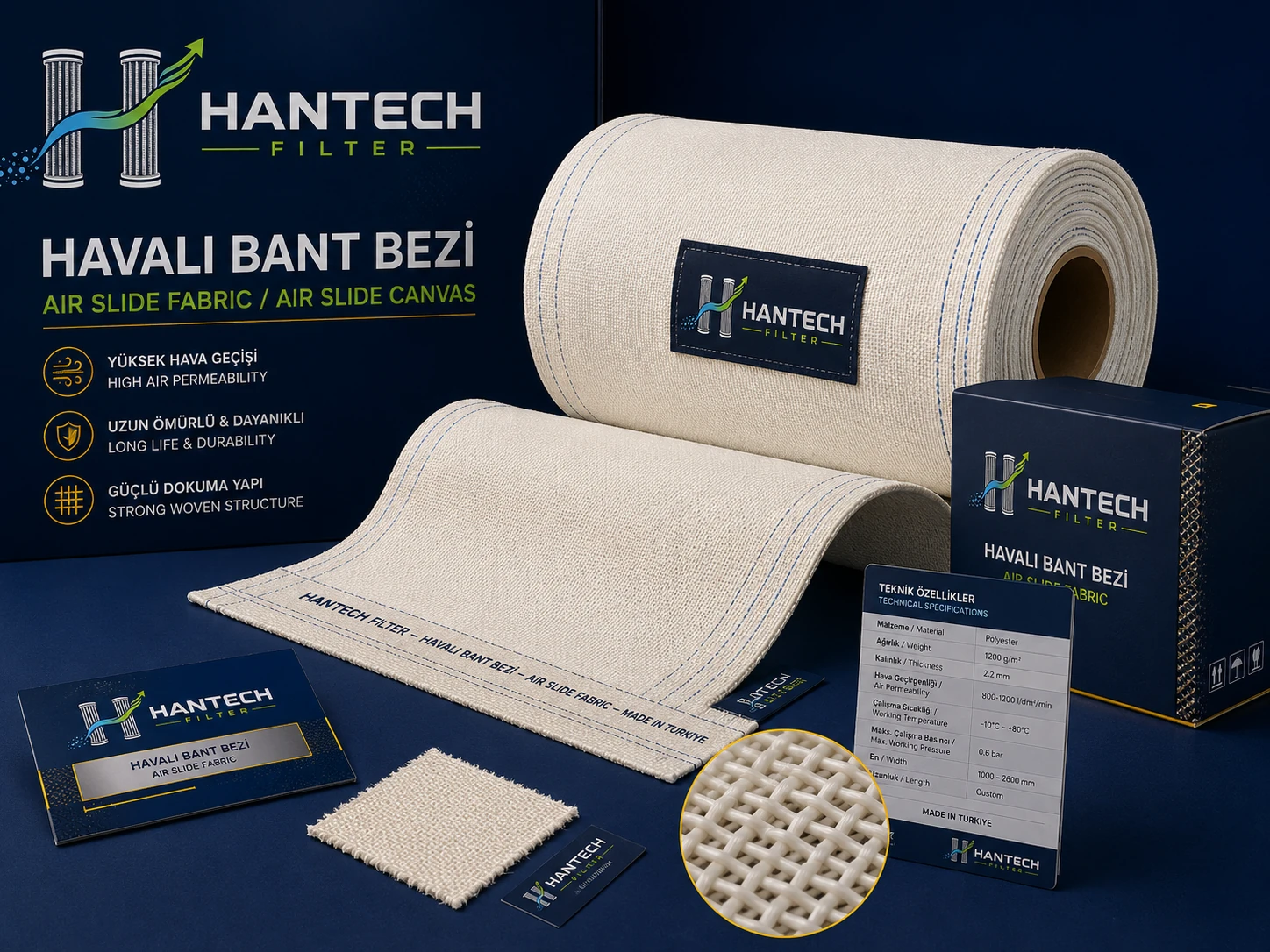 Product
Air slide fabric, air slide cloth, and cement pneumatic conveying fabrics.
Explore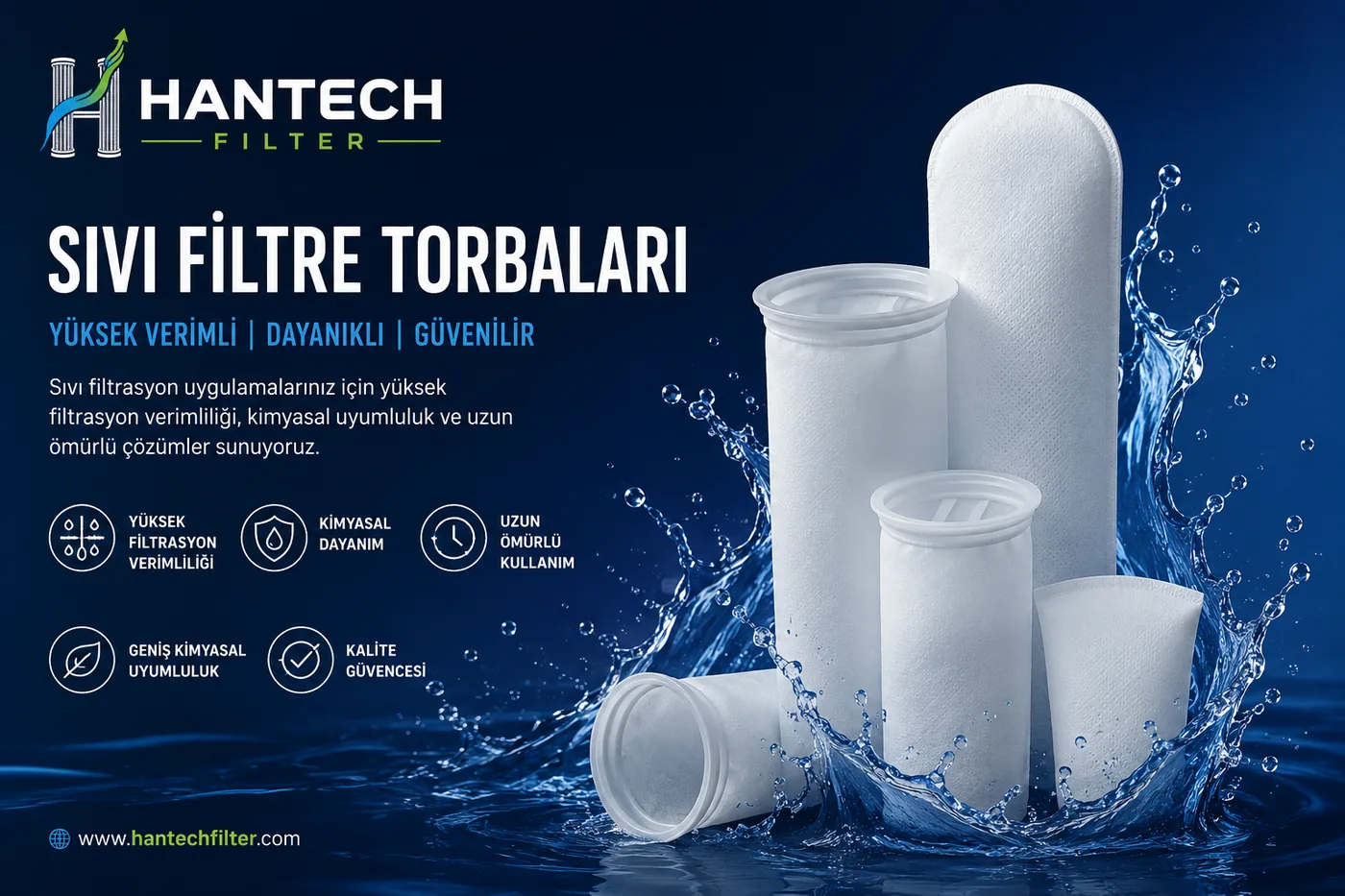 Product
Filter bags for liquid processes, cartridge/bag filter housing selection, and chemically compatible filtration solutions.
Explore