

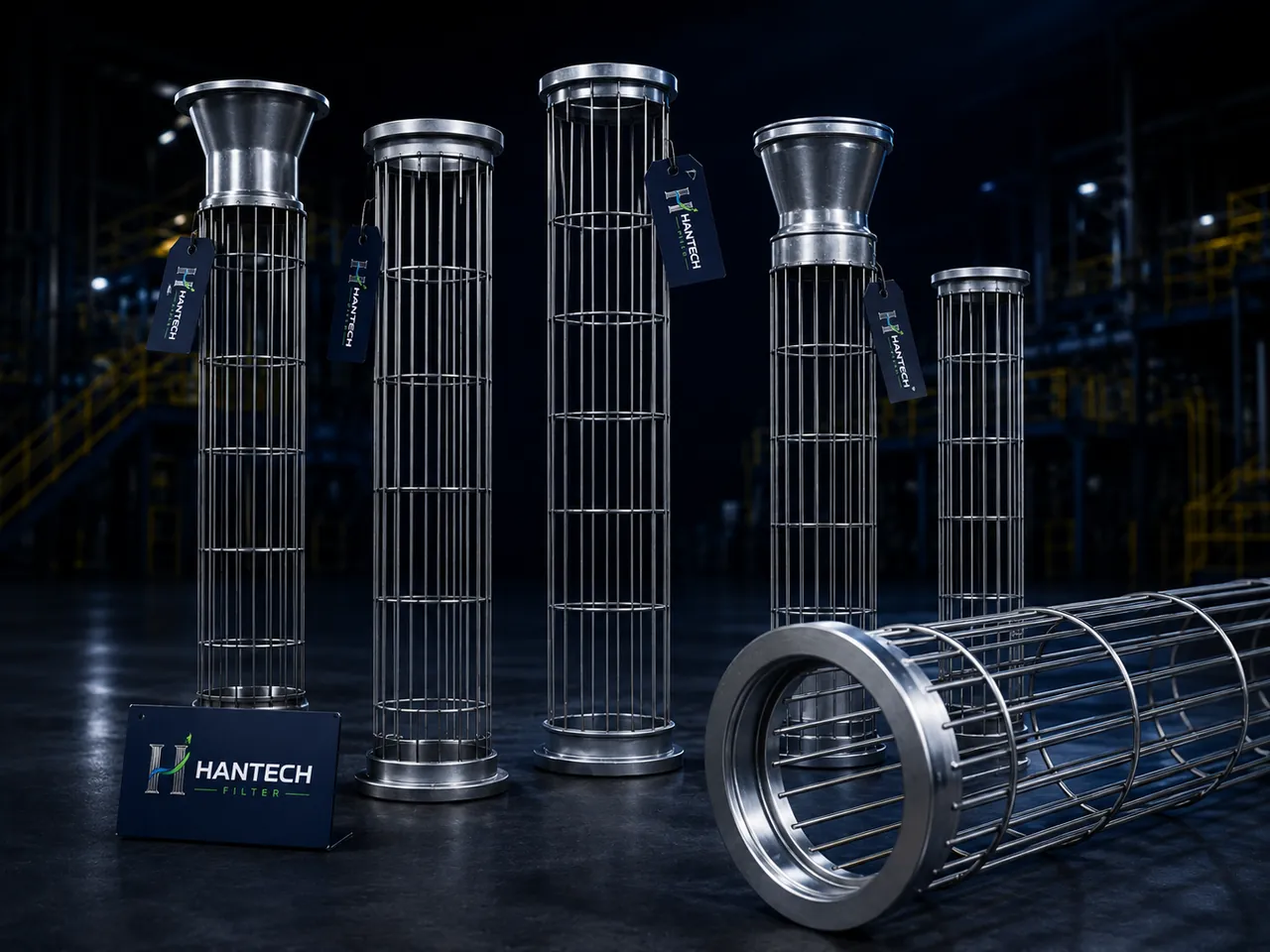
A snap-band filter bag cannot be safely selected without correctly measuring the cell plate hole, sheet thickness, double bead seal, cage outer diameter, and installation tolerance. Hantech Filter clarifies this connection detail together with technical sourcing and a site measurement.
What Is a Snap-Band Filter Bag?
Snap-band filter bags use a spring band and cord structure at the top cuff of the bag that seats into the cell plate hole. When correctly sized, this ensures cuff sealing; if incorrectly sized, stack dust, cuff leakage, bag flutter and premature tearing can occur even with well-chosen media.
The values shown are general references for technical selection. Hantech Filter specifies the snap-band attachment using process data, site measurements, cage compatibility and the technical scope of supply. Final dimensions must be verified through site confirmation and the supplier's technical approval.
Critical Dimensions That Must Be Measured
| Size | - why it is critical | Hantech check |
|---|---|---|
| Finished bag diameter | This can be interpreted differently from the nominal diameter and the lay-flat measurement. | The existing filter bag and drawing are reviewed together. |
| Lay-flat width | Is a fabrication and quality-control dimension. | Should not be confused with the finished diameter. |
| Cell plate hole | It is the main gateway for snap-band seating and sealing. | A caliper/template measurement is requested from the site. |
| Tube-sheet plate thickness | Determines correct locking of the fabric into the channel. | For existing filters, site measurement takes priority over drawings. |
| Cage outer diameter | Determines filter bag tension or knocking risk. | OD, wire count, rings, and burrs are checked. |
| Number and diameter of wicks | Single/double cord and cord thickness affect leakage. | It is written as an explicit technical line item in the RFQ. |
How Do Mouth Leakage, Low dP, and High Emissions Occur Together?
In the field, low differential pressure isn't always good news. If there's bypass at the bag mouth while the media itself looks sound, dP can stay low even as emissions rise. That's why, when selecting a new bag, it's not just the media type that matters — the snap-band seating mark, cell-plate hole, sheet thickness, cage OD, and installation orientation must all be checked together.
Example of field diagnostics
- Symptom
- dP low after new bags, high stack dust
- Initial suspicion
- Mouth leakage, cell-plate tolerance, or incorrect snap-band seating
- Control
- Hole diameter, sheet thickness, double bead mark, cage OD, and the dust pattern at the bag collar
- Comment
- In this situation, choosing a more expensive media does not fix the root cause; the connection geometry must be verified.
Snap-Band, Cage, and Media Decisions Can't Be Separated
| Status | Risk | Technical decision |
|---|---|---|
| Membrane or fiberglass filter bag | Mechanical contact and pulse sensitivity increase. | Cage surface, OD, and venturi are inspected more strictly. |
| Existing cage will be reused | Burrs, rust, or an incorrect OD damage a new filter bag. | A cage photo and its dimensions are the gateway to the RFQ. |
| Cell plate holes are worn | Even a new snap-band can leak. | Hole tolerance is noted, along with a revision note if needed. |
| Double wick indeterminate | The supplier may produce an incorrect top detail. | Cord count/diameter must be shown in the technical drawing. |
I Would Not Finalize the Snap-Band Size by Assumption Under These Conditions
Hantech's approach is clear here: if the dimension is uncertain, a quick quotation can be provided, but it is not presented as a final manufacturing/supply dimension. Site confirmation or sample/drawing verification is requested first.
Information Required for a Quote
Minimum data set for a quote: filter bag diameter/length/quantity, media and weight (gsm), top type, snap-band size, single/double cord information, cell plate hole diameter, tube sheet thickness, cage outer diameter and wire count, current filter bag/cage photos, dP/emission indication, pulse pressure, and any existing technical drawing.
You can send this information via the snap-band filter bag technical quote form. For the general product family, review the industrial filter bags, including snap-band options page.
Related Technical Guides
To clarify the decision, you can read the snap-band cuff detail guide, filter cage selection, filter bag types, and diagnosing differential pressure and leaks together.
Frequently Asked Questions
Why should the cell-plate hole be measured for a snap-band bag?
Because sealing does not depend on the nominal bag diameter, but on how the hole diameter, sheet thickness, band channel, and cord structure fit together.
Is a double cord mandatory on every snap-band filter bag?
This depends on project detail. However, if required, it must be stated explicitly in the RFQ, drawing, and quote line item — it should not be left to assumption.
Does the cage size affect the snap-band decision?
Yes. An incorrect cage outer diameter can stretch the bag, cause it to flap/rattle, or damage the neck area during installation.