
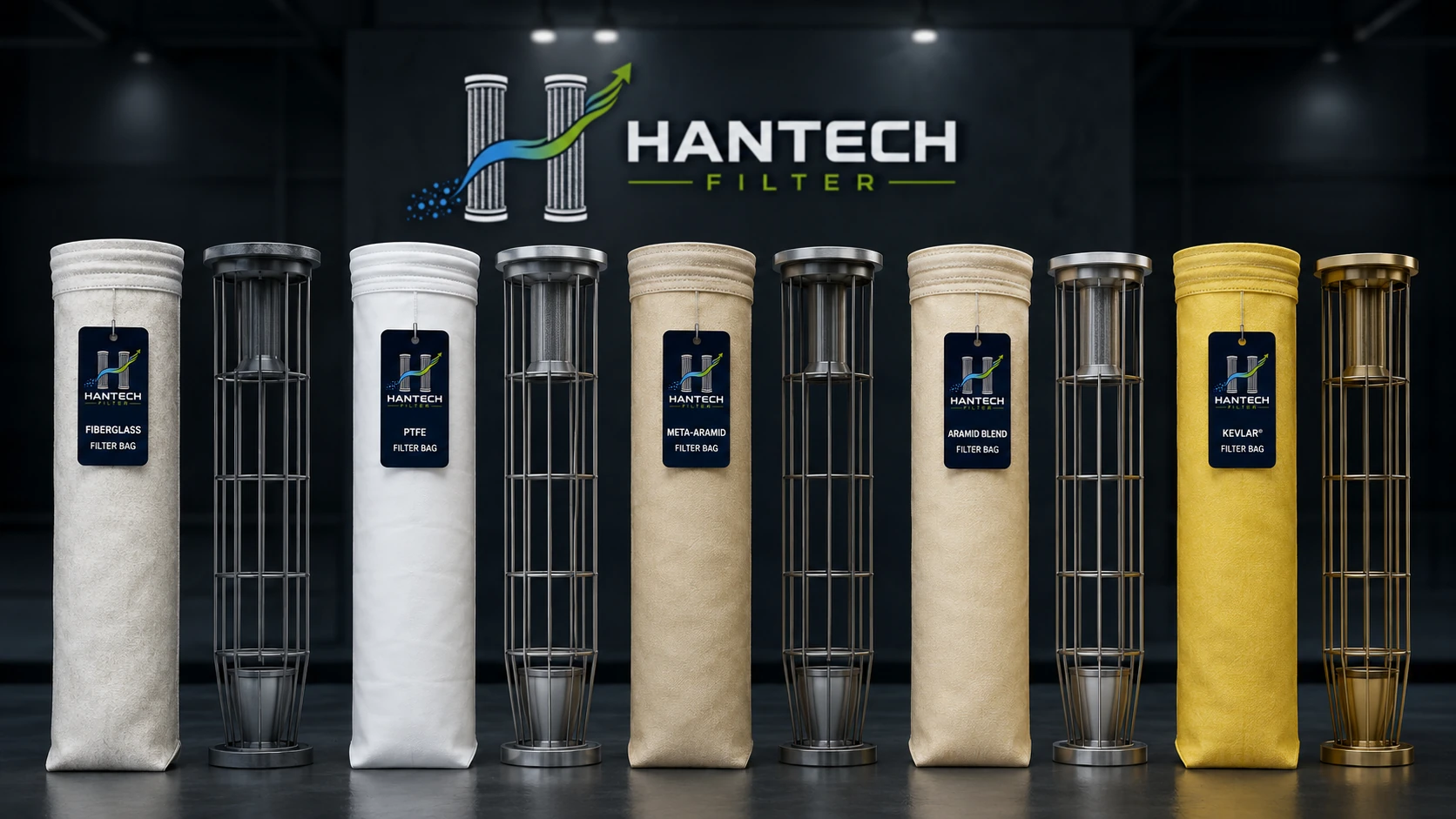
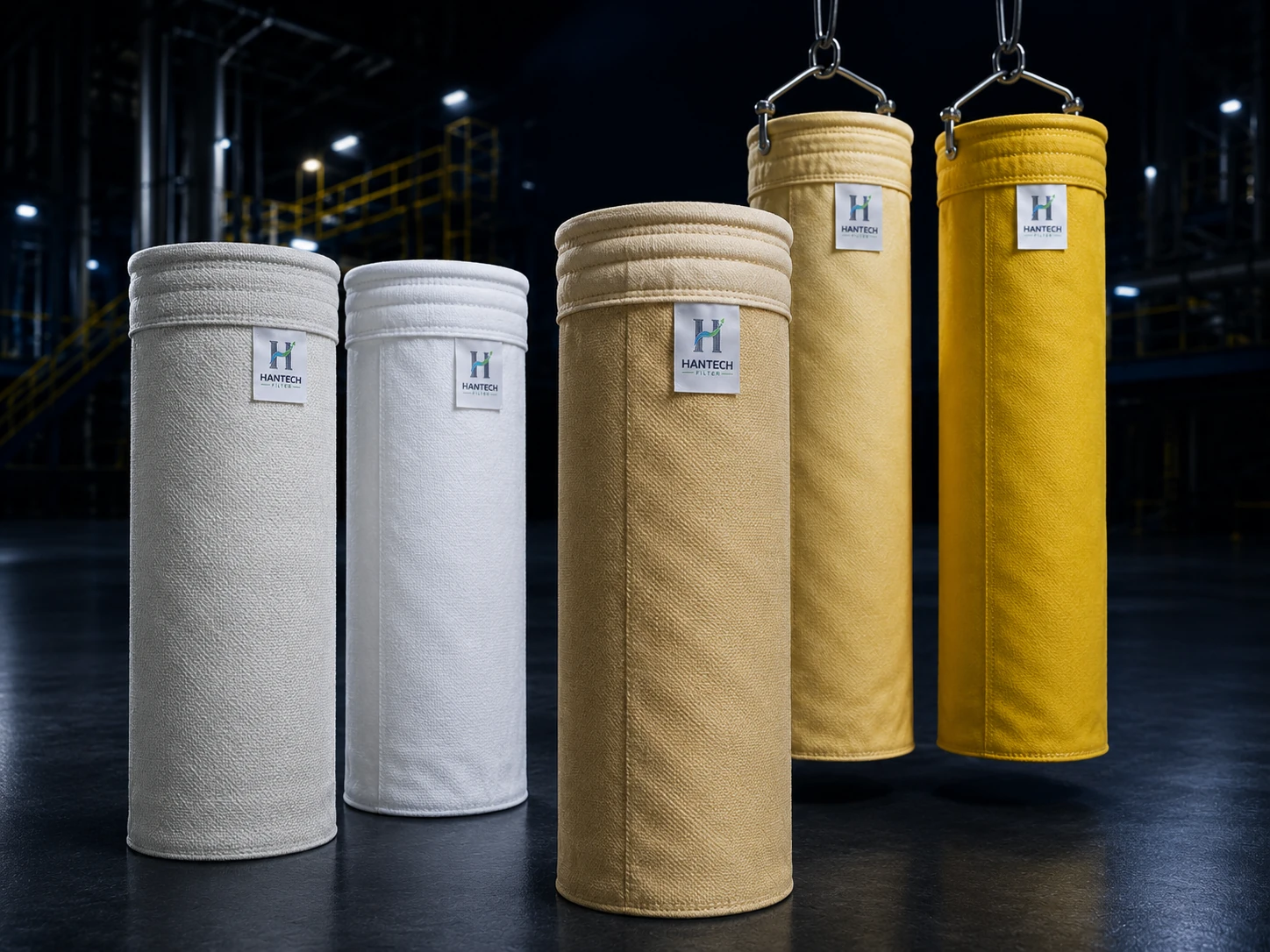
Antistatic filter bag is considered part of the safety chain in dusts that are combustible or accumulate static charge. However, it does not provide ATEX compliance on its own; the bag, housing, grounding, spark control, and process risk must all be verified together.
What Is Antistatic Filter Bag?
Antistatic filter bags are a filter bag family with conductive fiber additives or controlled surface resistivity, considered for processes where static charge buildup can increase fire or explosion risk. In wood/MDF, feed, food, coal, plastic, chemical dust and certain metal dust applications, antistatic media may be considered instead of standard PES.
The values shown are general references for technical selection and do not, on their own, constitute a claim of ATEX-certified equipment. Hantech Filter assesses antistatic bag suitability against process risks and defines the scope of dimensional and construction checks, verified sourcing and site application support. The final safety decision must be verified against the applicable project standard and site risk assessment.
In Which Processes Is It Considered?
| It's a must. | Antistatic bag assessment | Hantech decision |
|---|---|---|
| Flammable organic dust | Antistatic PES or acrylic may be a candidate. | Dust explosibility is assessed from Kst/Pmax data if available; otherwise a risk analysis is requested. |
| MDF, wood, feed, food, and plastic dust | Static charge and ignition sources can be critical. | Grounding continuity, fan/duct line, and discharge equipment are checked together. |
| Coal- or carbon-based dust | The safety concept extends beyond the filter bag itself. | Inertization, explosion venting/isolation, and process standards are also required. |
| High moisture or sticky cake | The antistatic property alone is not a solution for cake release issues. | Oil-water repellent finish, dew point, and dP trend are evaluated separately. |
| ATEX expectation | The filter bag is only one link in the chain. | Hantech does not sell antistatic bags in place of system safety; a written project requirement is needed. |
Grounding, Cage, and System Compatibility
For an antistatic bag decision, surface resistivity or conductive fiber construction alone is not sufficient. Electrical continuity and mechanical contact behavior must be checked across the bag mouth, snap-band, cage, cell plate, housing, fan/duct line, and discharge equipment. A poor cage surface or incorrect diameter can both damage the bag and weaken the safety chain.
Example of site control
- Process
- MDF sanding line filter
- Dust
- Fine organic dust, dry environment, occasional spark risk
- Control
- Antistatic PES is evaluated together with grounding continuity, spark detection/extinguishing, hopper discharge, pulse pressure, and cage surface condition.
- Comment
- An antistatic bag may be necessary, but it is not offered on its own as ATEX safety or explosion protection.
Comparing Antistatic PES, Standard PES, and Oil/Water-Repellent PES
| Media / finish | Strong side | Critical risk | Hantech comment |
|---|---|---|---|
| Standard PES | Economic dry process | May be insufficient for dusts with a static charge risk. | If there's no risk, unnecessary antistatic costs are avoided. |
| Antistatic PES | Contributes to static charge control | It does not replace ATEX design. | Selected together with grounding and system safety. |
| Oil-water repellent PES | Support for moisture/aerosol behavior | Does not resolve explosion risk on its own. | If moisture and static risk occur together, the finish combination is reassessed. |
| PPS / Aramid antistatic option | A candidate for temperature/chemistry requirements | Media limits and safety standards are a separate gate. | Considered when temperature and chemistry exceed PES limits. |
I Would Not Choose an Antistatic Bag on Its Own Under These Conditions
Hantech's approach is to correctly limit the process risk, not to sell safety through an antistatic label. If the risk genuinely exists, the antistatic bag is incorporated into the system safety chain; if not, a more economical, simpler media can be chosen.
Information Required for a Quote
Minimum data set for a quote: dust type, combustibility/explosivity data or existing risk analysis, process temperature/humidity, dust particle size and stickiness, current filter bag size/quantity, cage OD/wire count/venturi, cell plate and snap-band details, grounding status, pulse pressure, dP trend, current damage/leakage photos, and any applicable ATEX/project standard.
You can send this information via the antistatic filter bag technical quote form. For the general product family, review the filter bags by process condition, including antistatic options page.
Related Technical Guides
To clarify the decision, you can read the antistatic filter bag guide, the technical guide to polyester PES filter bags, oil-water repellent polyester filter bags, and how to choose a filter bag together.
Frequently Asked Questions
Does an antistatic filter bag replace ATEX certification?
No. The antistatic bag is only one part of the safety chain; ATEX or explosion protection design is carried out together with equipment, process, and site risk analysis.
Is an antistatic bag required for every type of wood or MDF dust?
A risk analysis is required. No automatic decision is made until dust flammability, dryness, ignition sources, grounding, and existing safety equipment are clarified.
Does an antistatic bag resolve rising dP?
Static-related buildup can be affected in some cases, but it doesn't solve a dP problem caused by moisture, oil, a high A/C ratio, insufficient pulsing, or the wrong media on its own.