
P84 filter bags are a strong premium candidate for high temperature, fine dust, and low emission targets, but should not be selected automatically without verifying chemical limits, cost, and process data.
What Is a P84 Filter Bag?
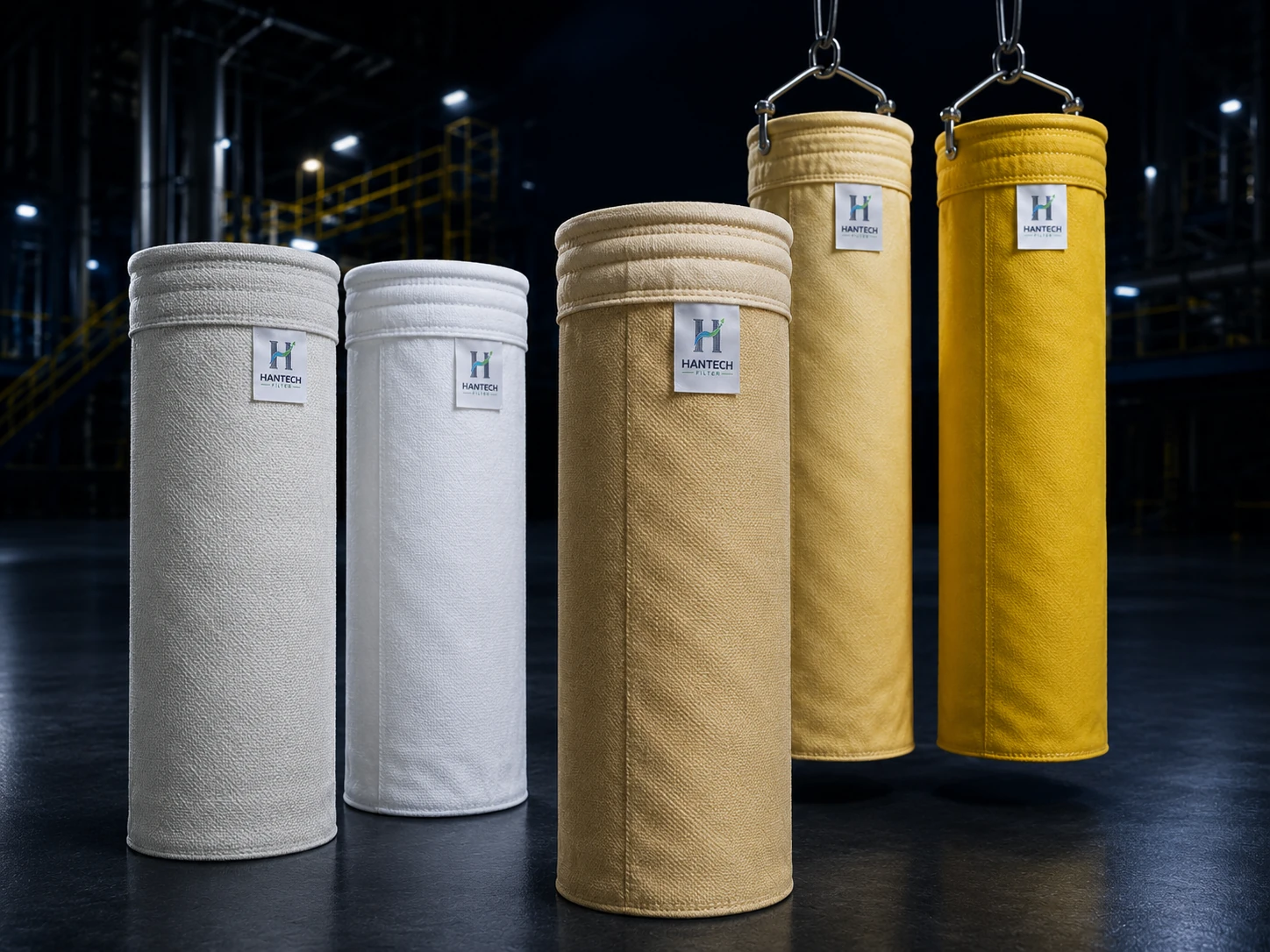
P84 filter bags are a polyimide-based, high-temperature filter media. Due to their fine dust retention performance, surface area/fiber structure and suitability for hot processes, they are evaluated alongside Aramid, PPS, PTFE or fiberglass options in cement, lime, mineral drying, metallurgy and certain power plant applications.
The values shown are general references for technical selection. Hantech Filter assesses P84 suitability using process data and defines the scope of dimensional and construction checks, verified sourcing and site application support. Actual limits must be verified against the manufacturer's data sheet and site records.
In Which Processes Is It Considered?
| It's a must. | P84 comment | Hantech decision |
|---|---|---|
| 220–240°C preliminary selection range | P84 can be a strong candidate at high temperature; short peaks are verified against the datasheet. | An RFQ cannot be closed without normal/peak temperature, peak duration, and gas chemistry data. |
| Fine dust + low emission target | P84 fiber structure can provide an advantage in filtration performance. | A/C ratio, dP trend, emission target, and, if necessary, membrane/finish are evaluated together. |
| Acidic/alkaline/oxidative gas risk | Chemical limits can vary depending on the process gas. | SOx/SO3, NOx/NO2, HCl, HF, O₂, moisture, and dew point are all needed together. |
| PES/PPS/Aramid-adequate process | P84 can be an unnecessary premium cost. | P84 is not imposed if a more economical media meets the conditions safely. |
| System with a cage/pulse problem | Premium media may not solve the root cause. | Cage surface, venturi, blow pipe alignment, and pulse pressure are checked first. |
Temperature, Chemistry, and Datasheet Discipline
The 220–240°C range for P84 should be read only as a preliminary selection basis. The actual continuous and peak limit can vary with the manufacturer's datasheet, media weight, scrim, finish, stitching thread, humidity, acid dew point, oxidation, and process fluctuation. If P84 is selected by looking only at the catalog temperature, both the cost risk and the bag-life risk increase.
Example of selection control
- Process
- Hot mineral drying filter
- Recording
- Normal 225°C, short peak 245°C, fine mineral dust, dP on new bags rises quickly above 1500 Pa
- Control
- A/C ratio, moisture/dew point, dust particle size distribution, pulse pressure, cage burrs, and a cross-section photo of the current filter bag are examined together.
- Comment
- P84 can be a strong candidate; however, if the problem originates from A/C ratio, pulse, or cage, upgrading media alone will not be a lasting fix.
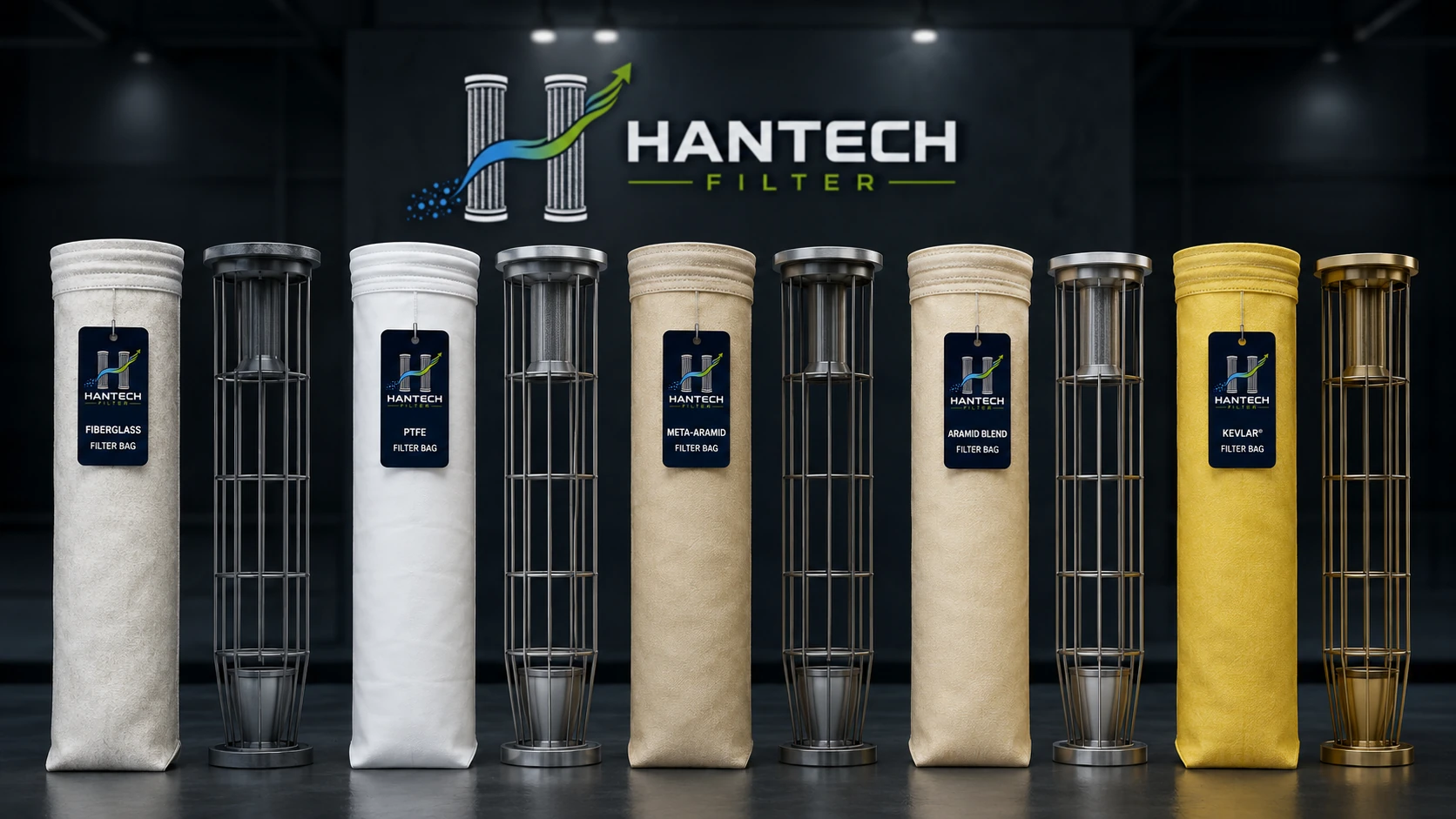
Comparison of P84, Aramid, PPS, PTFE, and Fiberglass PTFE
| Media | Strong side | Critical risk | Hantech comment |
|---|---|---|---|
| PPS | Temperature/chemistry balance | O₂ / oxidation | If O₂ is low and the chemistry is favorable, moving up to P84 can be unnecessary. |
| Aramid | Hot process conditions and mechanical strength | Acidic humidity | Can be an economical alternative when there is no acid/moisture risk. |
| P84 | High temperature + fine-dust performance | Chemical limit + cost | A strong candidate when needed; not an automatic premium choice. |
| PTFE | Chemical resistance | Cost and mechanical support | Can be considered in place of P84 when the chemistry is very aggressive. |
| Fiberglass PTFE | High temperature and dimensional stability | Brittleness, filter cage/pulse sensitivity | Compared if the cage and installation standard are suitable. |
I Wouldn't Pick P84 Under This Condition
Hantech's approach is not to automatically sell the premium product, but to demonstrate under which conditions it is genuinely necessary. If P84 is required, the technical justification is given; if not, a more economical and equally safe alternative is clearly stated.
Information Required for a Quote
Minimum data set for a quote: normal/peak temperature, peak duration and frequency, SOx/SO3, NOx/NO2, HCl, HF, O₂, humidity, dew point, dust type/particle size/abrasiveness/stickiness, flow rate, filter bag diameter/length/quantity, top/bottom construction, snap-band, cage OD/venturi, pulse pressure, dP trend, emission target, current filter bag service life, and failure photos.
You can send this information via the P84 filter bag technical quote form. For the general product family, review the high-temperature filter bags, including P84 page.
Related Technical Guides
To clarify the decision, you can read the P84 filter bag guide, Aramid / Nomex filter bag comparison, PPS filter bag selection guide, fiberglass PTFE filter bag and how to select a filter bag articles together.
Frequently Asked Questions
At what temperature is a P84 filter bag used?
For preliminary selection, a 220-240°C range can be considered; the actual limit must be verified against the manufacturer's datasheet, peak duration, gas chemistry, humidity, and mechanical construction.
Is P84 always better than PTFE?
No. P84 is a strong candidate in terms of filtration performance, while PTFE may be more suitable for chemical resistance. The choice is made based on process chemistry, temperature, cost, and mechanical support.
Can Aramid or PPS be sufficient instead of P84?
Yes. If the process temperature and chemistry fall within the limits of more economical media, Hantech does not automatically recommend P84 as the premium solution.