
What Is a Jet Pulse Filter and How Does It Work?
A jet pulse filter (pulse-jet baghouse) is a bag filter system in which the bag, cage, venturi, pulse valve and control panel work together, cleaning itself online with compressed air. It is commonly chosen for continuous processes and medium-high dust loads.
Jet pulse cleaning step by step
Dust-laden gas enters the housing, is captured on the bag surface, and clean gas is routed to the stack. Once differential pressure crosses a set threshold, the corresponding bag row is cleaned by a short compressed-air pulse from the pulse valve.
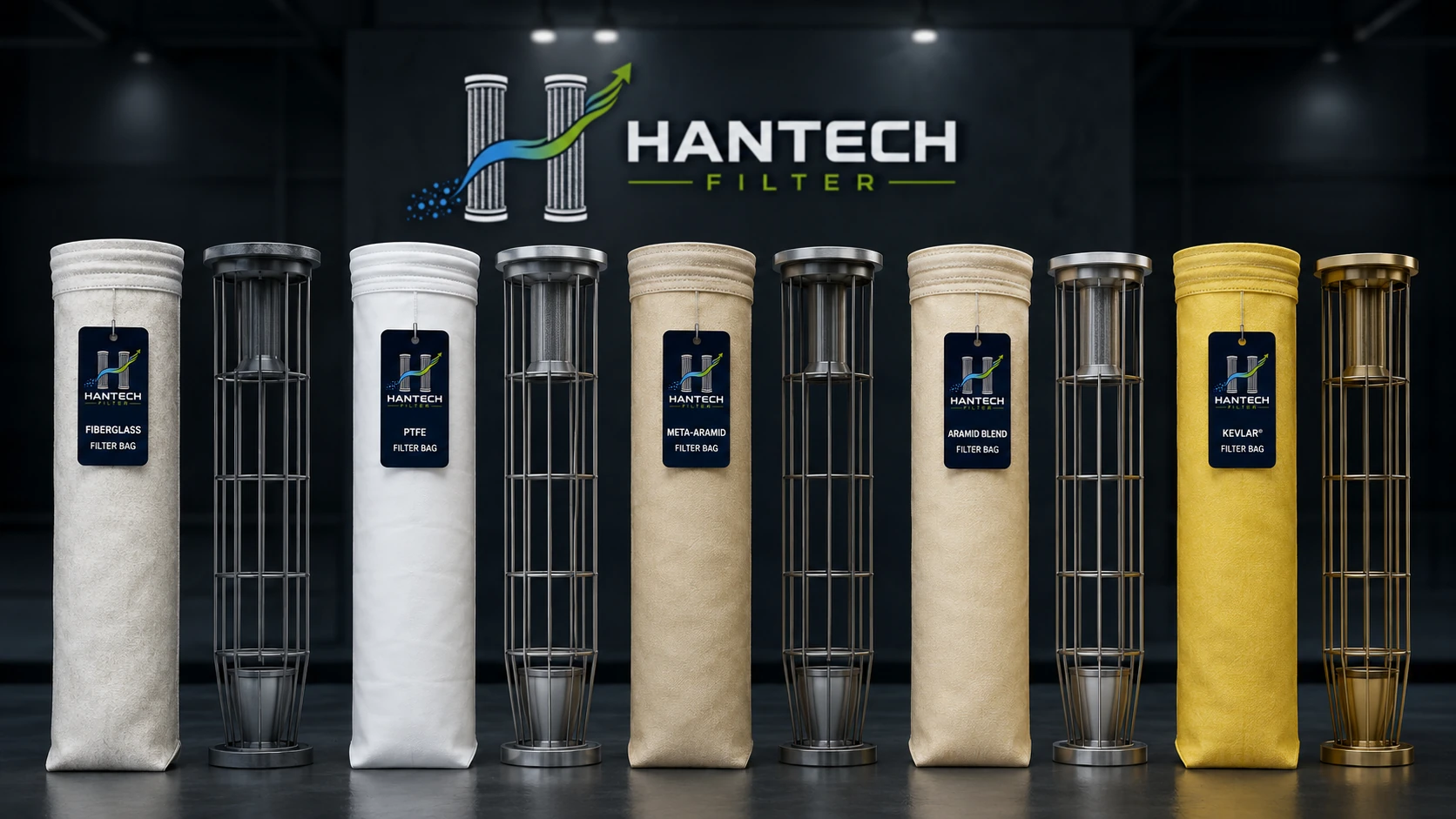
Bag & cage
The filter surface through which dust-laden gas passes from outside to inside; the cage keeps the bag from collapsing and holds its shape.
Venturi & pulse valve
A short compressed-air pulse is delivered into the bag through the venturi, shaking loose the dust cake on the surface.
Control panel
Manages which bag row is cleaned, based on differential pressure or a time-based sequence.
When it is preferred, and when it needs careful evaluation
For a comparative selection table against reverse-air and shaker-cleaned systems, see the Bag Filter Systems page.
About jet pulse filters
Are a jet pulse filter and a baghouse the same thing?
Baghouse is the general name for a bag filter system; jet pulse filter is that system's most common cleaning type, cleaned with compressed air.
How does a pulse valve failure affect differential pressure?
A faulty or mistimed pulse valve can leave the corresponding bag row insufficiently cleaned and raise differential pressure.
Can we convert our existing system to jet pulse cleaning?
A retrofit can be evaluated depending on the housing, ductwork and compressed air infrastructure; feasibility is confirmed with site data.
System, valve and material pages
Bag Filter Systems — complete system selection and quote. Pulse Jet Valves — valve type and selection criteria. Technical Pages by Filter Bag Material — temperature and chemical resistance comparison.
Nationwide field support across Turkey
Hantech Filter is Ankara-based and provides site measurement, technical sourcing and application support to cement, iron & steel, mining, lime-gypsum, power plant and heavy industry facilities across Turkey.
In the cement and construction materials line we support facilities in Istanbul, Kocaeli, Bursa, Konya, Kayseri, Elazığ, Çorum, Sivas, Afyonkarahisar, Isparta, Denizli, Balıkesir, Çanakkale, Kırıkkale, Niğde and Nevşehir; in the iron & steel and mining line in Hatay, Karabük, Zonguldak, Muğla, Kütahya and Batman; and in the energy and heavy industry line in Manisa, Kahramanmaraş, Osmaniye, Gaziantep, Şanlıurfa, Diyarbakır, Trabzon, Samsun, Kırklareli, Tekirdağ, Bolu, Yozgat, Mersin, Adana, Eskişehir and Malatya, with technical selection, filter bags, cages, pulse jet valves and spare parts.
Share your process data for your jet pulse filter system.
Send us flow rate, temperature, dust type and your current housing/bag information; let's work out the system and component selection together.