
HANTECH FILTER · AXIAL FAN FAMILIES

Axial Fan Families

Different fan arrangements for shell cooling, directed airflow and panel-mounted ventilation. Diameter, rotor, speed and connection geometry are selected together for the application.

First the application family, then the duty point

A single airflow value does not define the entire axial fan group. Start by comparing different casing, outlet and mounting arrangements.

Rail-mounted shell cooling fans
Hantech 3D project design
HANTECH APPLICATION FAMILY

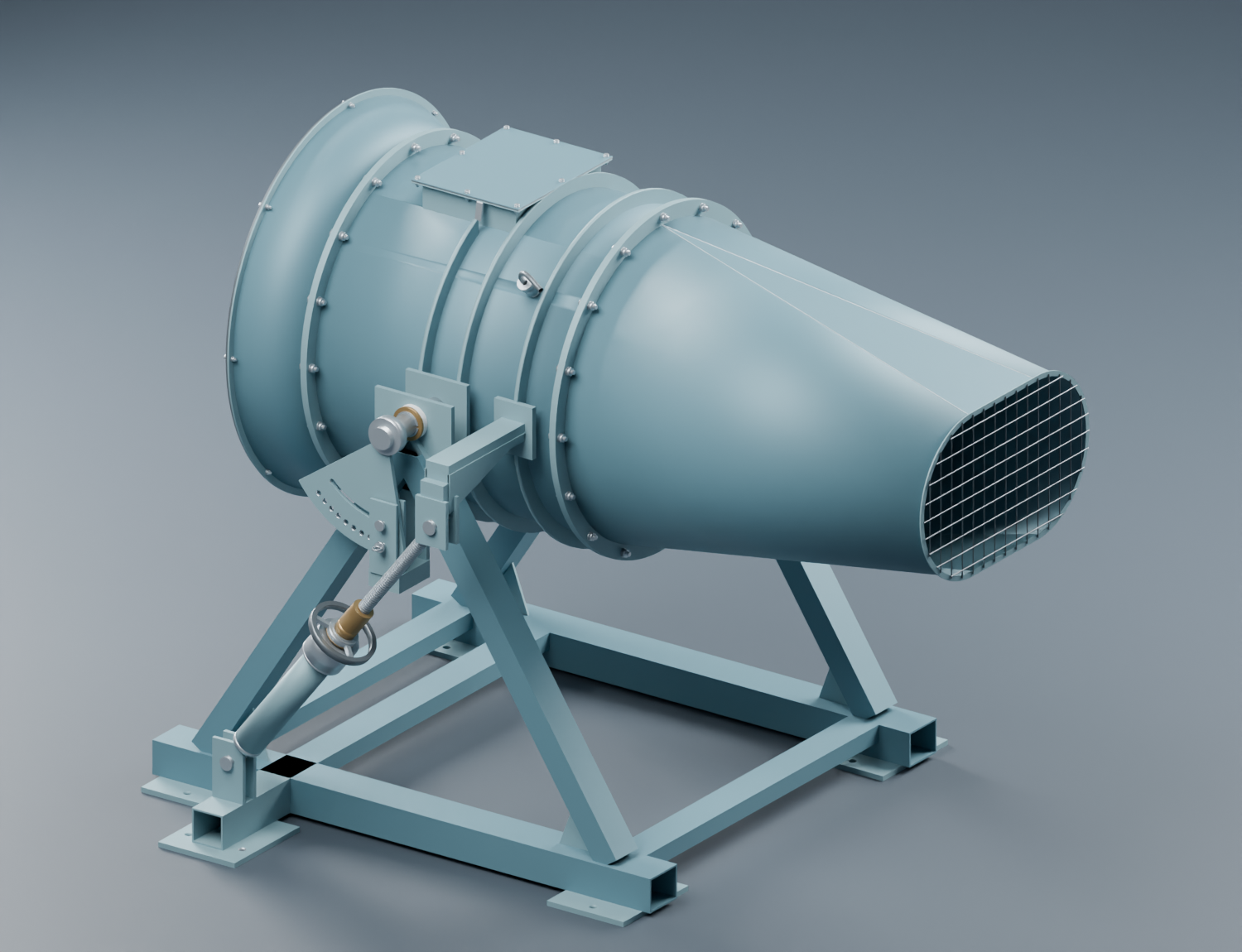
Hantech Shell

Rail-mounted shell cooling fans

An adjustable arrangement that directs air onto a rotary kiln shell and can be moved along rails.

Application
Rotary kiln shell cooling
Casing & outlet
Circular casing with a rectangular outlet transition
Mounting arrangement
Wheeled base, rail travel and angle adjustment

The single rotor and fixed flow straightener are modelled together. Outlet geometry, aiming angle and site rails are assessed for the installation.

Technical selection for this family →
Axial fans with a nozzle and adjustable direction
Hantech 3D project design
HANTECH APPLICATION FAMILY

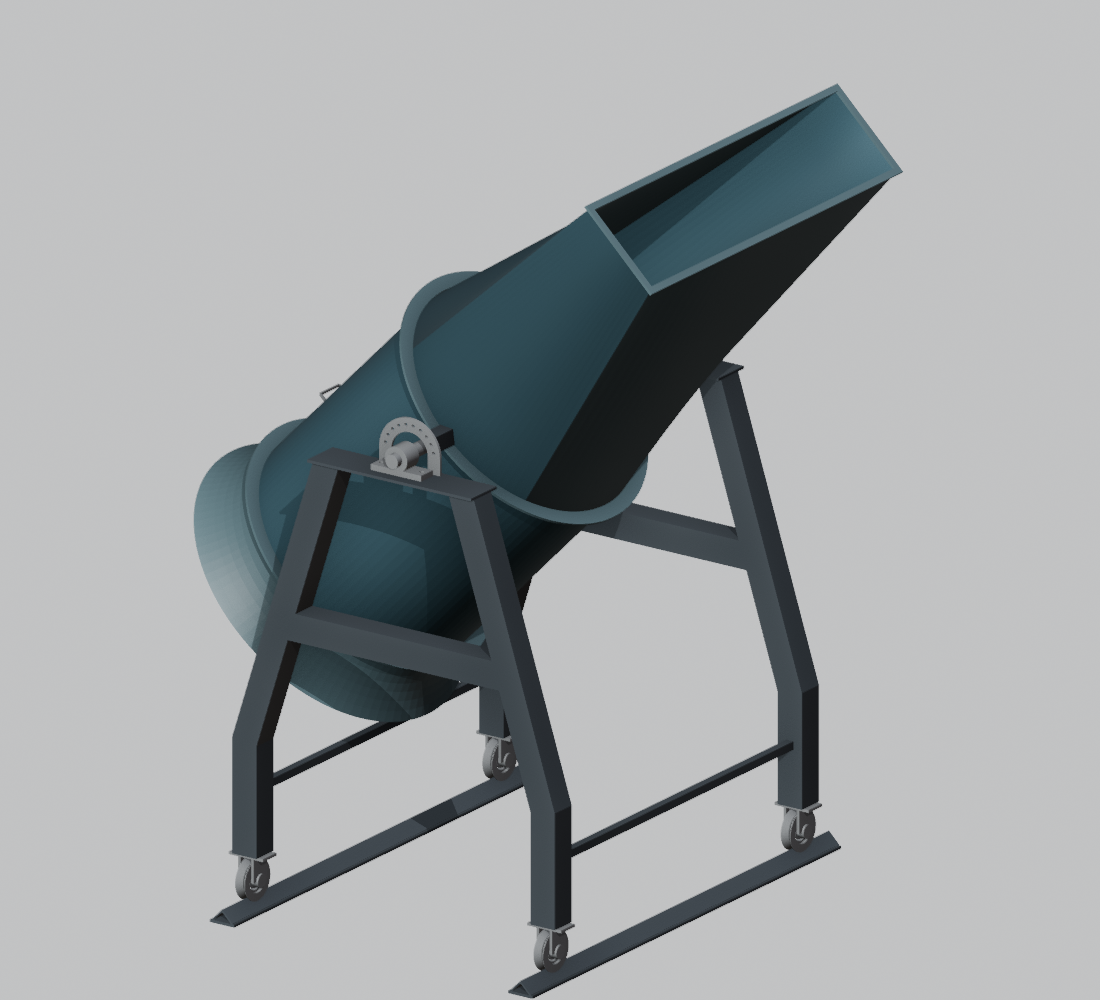
Hantech Nozzle

Axial fans with a nozzle and adjustable direction

An arrangement combining an outlet nozzle and a tilt-adjustable base to direct air towards a defined area.

Application
Directed airflow and local cooling
Casing & outlet
Flanged nozzle and outlet guard
Mounting arrangement
Base with screw-operated tilt adjustment

Upper service access, motor layout, nozzle connection and aiming adjustment are considered within one assembly. Nozzle exit velocity is defined together with fan airflow.

Technical selection for this family →
Panel-mounted and short-casing axial fans
Hantech 3D project design
HANTECH APPLICATION FAMILY

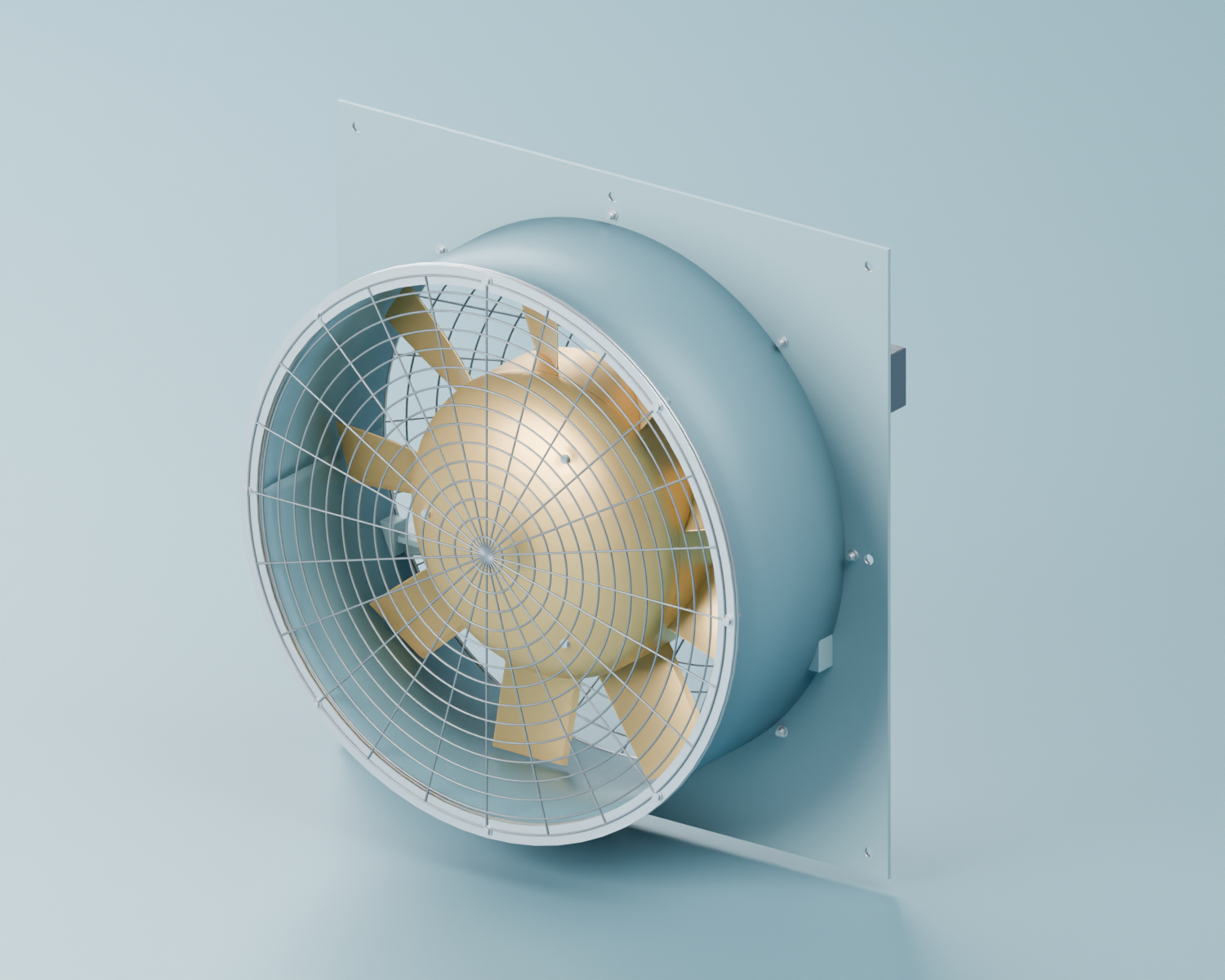
Hantech Panel

Panel-mounted and short-casing axial fans

A compact mounting arrangement combining a short fan ring and a mounting panel.

Application
Air movement through panel-mounted openings
Casing & outlet
Short ring casing and guards on both sides
Mounting arrangement
Mounting panel and motor support

The mounting opening, connection holes, flow direction and removable service guards are considered together. Panel and support loads are checked for the application.

Technical selection for this family →
The family names describe Hantech application groups. The images show our project design studies. Final dimensions and duty points are determined through technical selection; a design image alone does not establish a tested capacity range.

Project selection beyond a single model

Different diameters, blade arrangements, motors and connection solutions are considered within each application family. Selection is not based on catalogue airflow alone.

Diameter & casing

Geometry is selected by considering installation space, airflow, tip speed and service clearance together.

Rotor & blade setting

Blade profile, blade setting, hub ratio and the fixed flow straightener arrangement are assessed for the duty point.

Speed & motor

Density, temperature, motor load and control requirements are reviewed together. One speed does not define an entire family.

Nozzle & installation

Rail, base or panel mounting is selected together with outlet section, aiming angle, guards and maintenance access.

ONE PROJECT EXAMPLE WITHIN THE FAMILY

Shell cooling fan: documented project example

The 36,000 m³/h duty point belongs to the project below. It is not the capacity or family limit of all Hantech axial fans.

Technical details of the 36,000 m³/h project example840 Pa total pressure · Ø900 rotor · 15 kW motor · Documented design data

Shell cooling fan: project specifications

The fan, motor, casing and outlet geometry are considered as one technical assembly.

36,000 m³/hDesign airflow
840 PaTotal pressure
Ø900 mmRotor diameter
15 kWMotor power
Design values from the source drawing and technical data sheet, not measured performance results. 840 Pa is total pressure. Final airflow, pressure, efficiency and noise levels require verification under actual operating conditions using an agreed acceptance test.
Design airflow
36,000 m³/h
Total pressure
840 Pa
Operating temperature
20 °C
Fan speed
1,466 rpm
Motor power / nominal speed
15 kW / 1,500 rpm
Rotor diameter
Ø900 mm
Casing inside / outside diameter
Ø904 / Ø912 mm
Casing axial length
902 mm
Inlet diameter
Ø1117 mm
Transition length
1,300 mm
Rectangular outlet
350 × 1,450 mm
Wheel / groove
Ø150 × 40 mm / 90° V
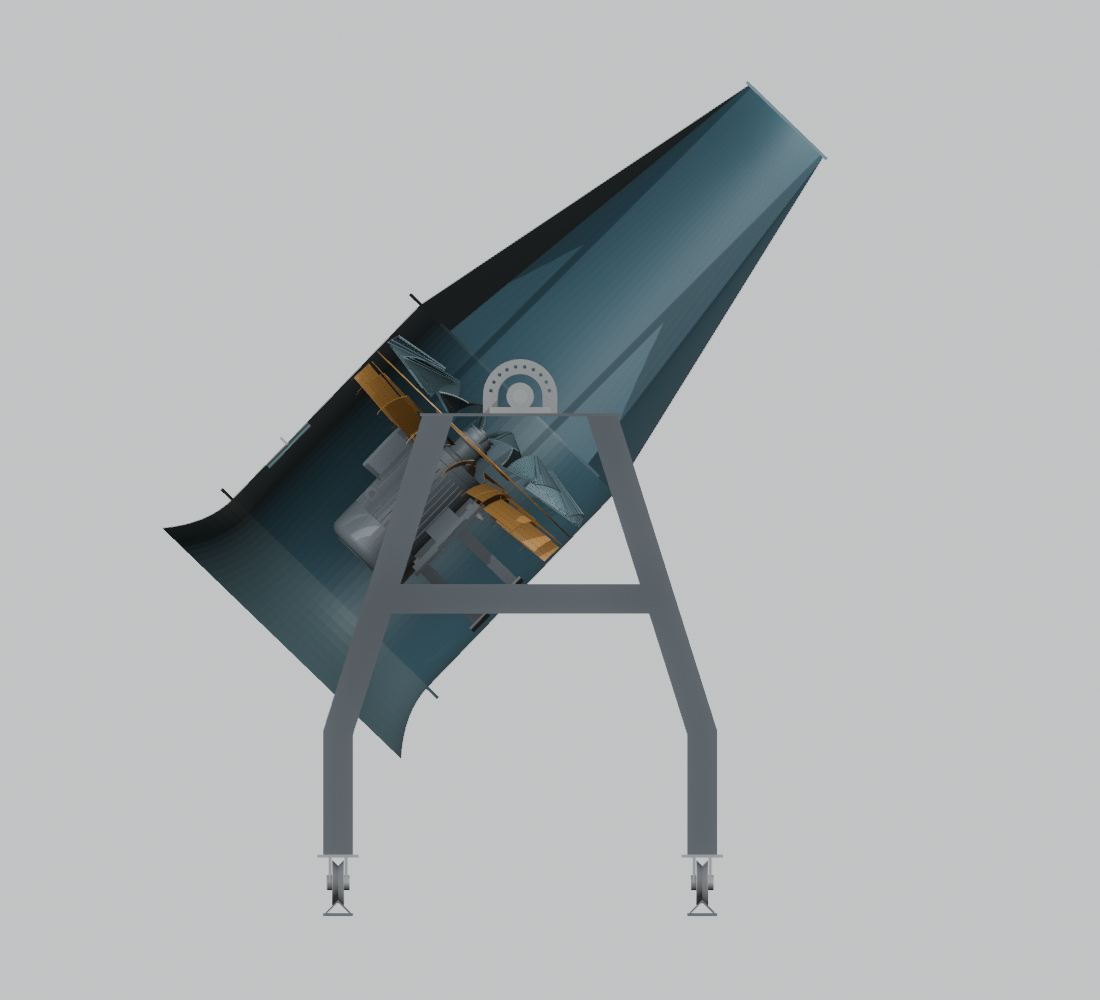
CAD cutaway showing the rotor, fixed flow straightener and motor layout of the Hantech shell cooling fan
Project-model cutaway showing the internal arrangement: one rotating rotor and a fixed flow straightener.

One rotor. Fixed flow straightener. Application-specific outlet.

The second blade row is not another rotor. A fixed flow straightener is positioned inside the casing to guide the flow downstream of the rotor. The motor and its supports are modelled within the same assembly.

  • Circular casing and enlarged inlet: The source drawing defines a Ø900 mm rotor, Ø904 mm casing inside diameter and Ø1117 mm inlet.
  • Rectangular outlet transition: The 1,300 mm transition connects to a 350 × 1,450 mm outlet. Connection and installation dimensions are checked for each project.
  • Wheeled support arrangement: The model includes Ø150 × 40 mm wheels with a 90° V groove. Site rails, installation space and movement limits need to be reviewed before installation.

For other airflow and installation requirements, let’s review the fan family, target pressure and site conditions together.

What information is needed to select an axial fan?

  • Required airflow and a clear static or total pressure definition.
  • Air temperature, density, dust and corrosive conditions.
  • Inlet and outlet connections, installation dimensions and flow direction.
  • Motor supply, speed control, noise limits and safety requirements.
  • Existing drawings, site photographs and acceptance/test requirements.

Let’s define your application.

Share the duty point and installation conditions. Hantech Filter can prepare the fan arrangement, connection geometry and technical quotation scope from your project data.

Request a technical quote