
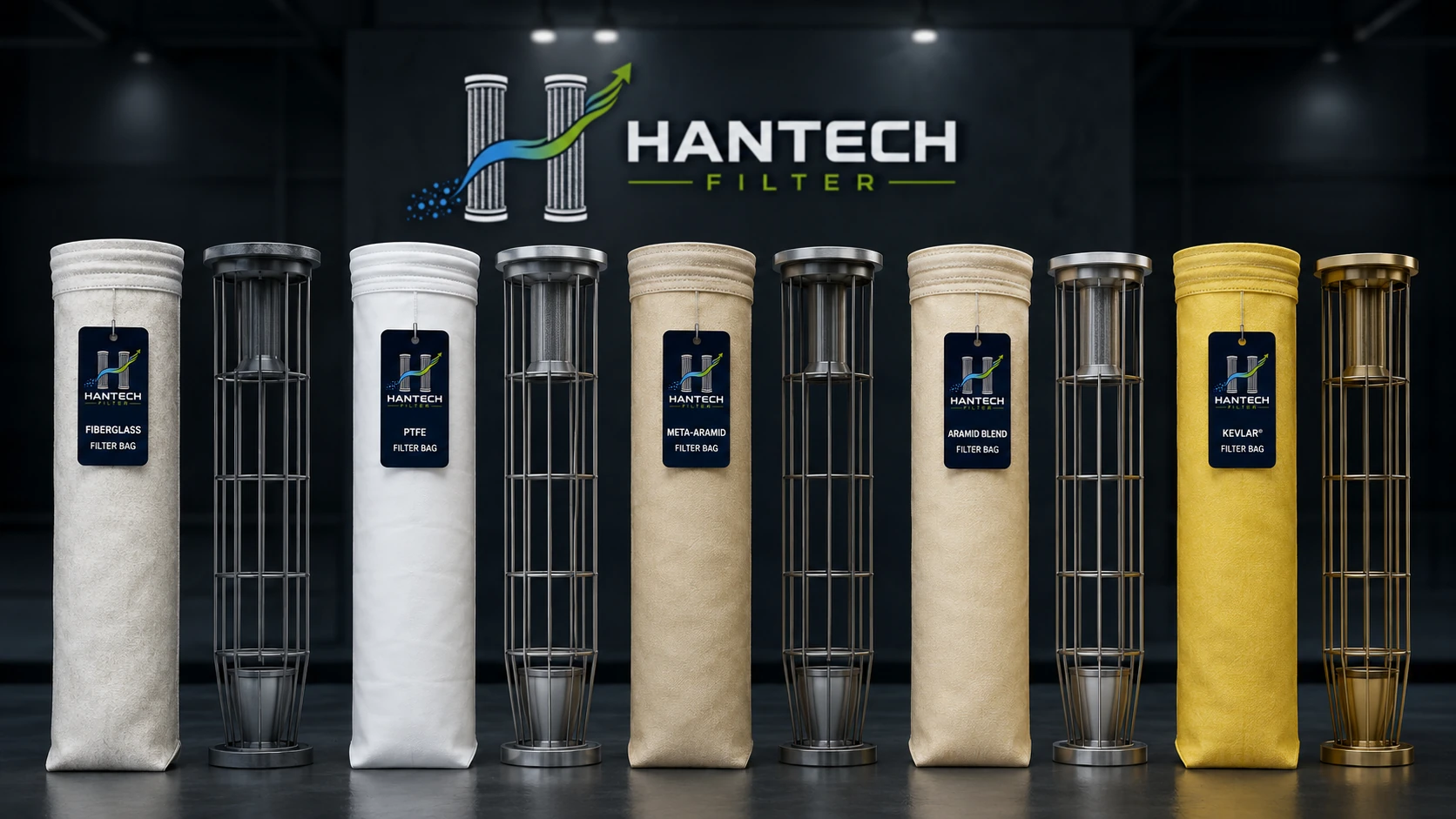
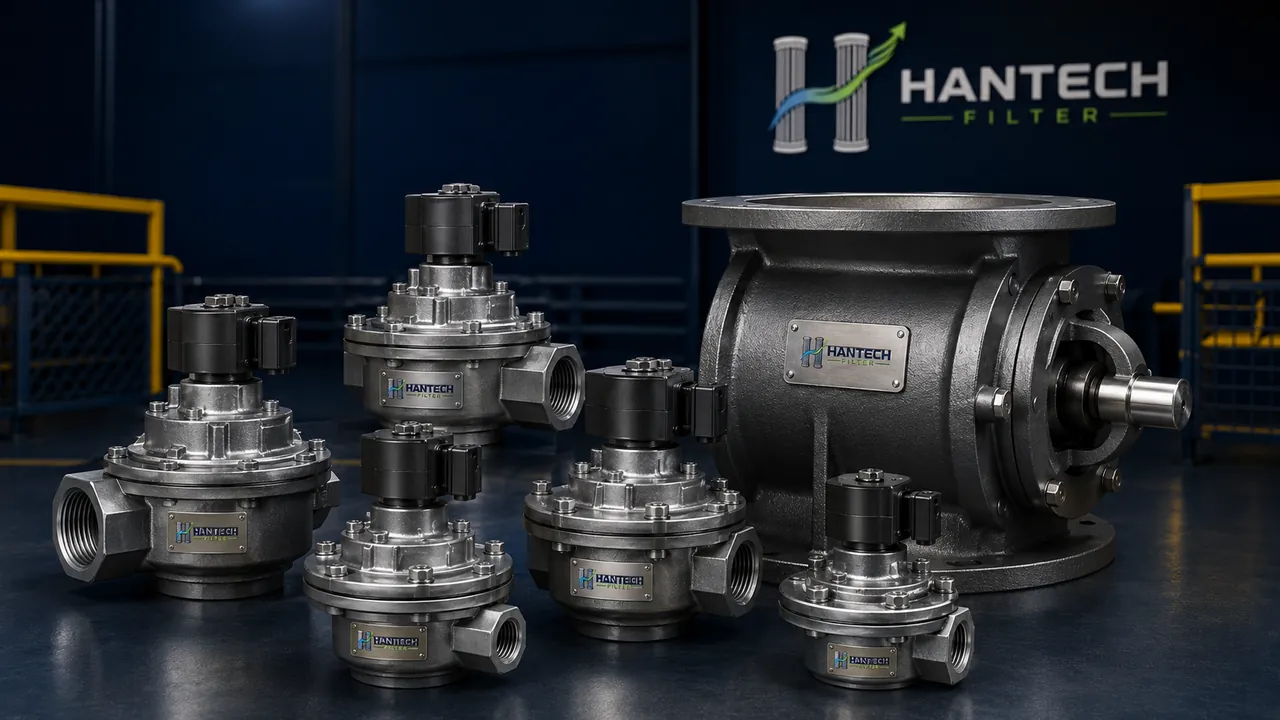
A pulse-jet valve failure shows up as rising differential pressure across the baghouse filter, a weak cleaning pulse sound, continuous air leakage, a torn diaphragm, a burnt-out coil, or a timer signal fault. For accurate diagnosis, the valve should not be checked in isolation; air tank pressure, blow pipe alignment, compressor capacity, pulse duration, and filter bag behavior must all be checked together.
What Is a Pulse-Jet Valve and What Does It Do in the System?
The pulse-jet valve is the cleaning component that delivers compressed air to the blow pipe line in short bursts in baghouse filters. The diaphragm valve, solenoid coil, pilot air line, air tank, nozzle holes, and the timer- or dP-controlled panel work together. The goal is to dislodge the dust cake from the filter bag in a controlled way, keep the differential pressure stable, and operate the filter without overstressing the bag surface.
A valve failure is usually not just a spare parts issue. Weak compressor air, an undersized tank volume, water/oil in the line, incorrect pulse duration, a blow pipe hole misaligned with the bag center, or filter media unsuited to the process dust can all produce the same symptom. This is why Hantech's assessment reads pulse-jet valves, the baghouse filter system, and the filter bag together.
How Is a Pulse-Jet Valve Fault Diagnosed?
| Symptom | Possible cause | Initial inspection on site |
|---|---|---|
| dP rapidly climbs above 1800-2200 Pa | Valve won't open, pulse is weak, the bag is blinding, or A/C ratio is high | Valve sound, tank pressure, pulse duration, bag surface |
| There is continuous air leakage | Torn diaphragm, fouled pilot passage, valve seat damage | Continuous blow-through and air consumption at the valve outlet |
| Valve does not trigger at all | Coil, wiring, timer output, or solenoid issue | Coil voltage, terminal connection, panel fuse |
| Cleaning noise is weak | Low tank pressure, undersized line diameter, low compressor capacity | Tank pressure drop during the pulse |
| Some bag rows are not cleaning properly | Blow-pipe/nozzle alignment, row valve, or wiring issue | Comparison between a problem row and a sound row |
In a healthy filter, dP after new bags are installed usually stabilizes for a while in the 900-1100 Pa range. If dP rises quickly soon after new bags are fitted, the problem isn't the valve alone — dust may be embedding into the felt, a moist cake may not be releasing, the filtration velocity may be too high, or pulse energy may not be reaching the bag properly.
Decision Matrix for Diaphragm, Coil, Pressure, and Timer
An aggressive, generic 5–6 bar cleaning approach is not correct for PTFE membrane bags. For training and RFQ purposes, 3–4 bar, maximum 4 bar, should be assumed; a higher value is only considered if approved by the bag manufacturer and warranted by process conditions. If the membrane bag's surface, cage, and venturi support are not adequate, even a good valve cannot preserve bag life.
| Check Step: | Healthy sign | Risk sign |
|---|---|---|
| Tank pressure | Recovers quickly after the pulse | Pressure drops permanently with each pulse |
| Coil/solenoid | Fires cleanly at the correct voltage | Overheating, intermittent triggering, or no response |
| Diaphragm. | Short, sharp air pulse | Continuous leakage or weak pulse |
| dP trend | Controlled drop after cleaning | dP does not drop after cleaning |
Example Failure Scenario: Cement Packaging Filter
Sample site data
- Flow Rate
- 32,000 m³/h
- Bag count
- 180
- Bag size
- 160 mm x 5,000 mm
- Tank pressure
- Set at 6 bar, drops to 3.8 bar during the pulse
- Symptom
- Weak cleaning across three rows, dP 2,100 Pa
- Dust
- Fine cement, high 1-10 µm fraction
In this table, simply replacing the valve alone may not be a lasting fix. A rapid drop in tank pressure during a pulse can indicate insufficient tank volume, air line diameter, or compressor capacity. If cleaning is weak across three rows, blow-pipe holes, the valve row connection, and wiring output should be compared. If the bag media is embedding into the felt with fine cement dust, the need for a surface finish or membrane should be evaluated separately.
When Isn't Simply Replacing the Valve Enough?
Information Required for Quotes and Maintenance
For a pulse-jet valve, diaphragm, or solenoid coil quotation, please provide the valve diameter, connection type, current brand/model, coil voltage, air tank pressure, number of valves, number of bag rows, blow-pipe diameter, current dP trend, and whether the fault is continuous or intermittent. Photos, nameplate information, and the control panel output number speed up the quotation process.
You can send your technical data through the quote form. For related products, evaluating filter bags, filter cages, and pulse-jet valve equipment together gives more accurate results in most applications.
Frequently Asked Questions
What should be done if a pulse-jet valve keeps leaking air?
The diaphragm, valve seat, pilot air line, and contamination should be checked first. Continuous leakage increases compressor load and can reduce the cleaning energy available to other valves.
Why doesn't the valve open when the coil looks fine?
Voltage, cable termination, timer output, solenoid pilot path, and air pressure must all be checked together. A warm coil alone does not prove healthy operation.
How long should the pulse duration be?
This depends on the filter design, valve diameter, and tank volume. A pulse duration longer than necessary does not mean better cleaning; it can increase air consumption and stress on the bag.
If dP is high, is the valve necessarily faulty?
No. The wrong bag media, a high A/C ratio, damp dust, hopper discharge problems, or the fan operating point can also cause high dP.
What cleaning pressure, in bar, should be used for a membrane filter bag?
On a general educational basis, a 3-4 bar approach with a maximum of 4 bar is safer. Higher pressure should not be applied without manufacturer approval.