
The decision to renew a baghouse filter should be made by reviewing the dP trend, emission behavior, fan operating point, housing tightness, pulse-jet system, filter area, hopper discharge, process capacity, and maintenance cost together. Not every high dP means a new filter investment is needed; however, at some sites retrofit may no longer be sufficient.
Why the Decision to Retrofit a Baghouse Filter Should Not Be Rushed
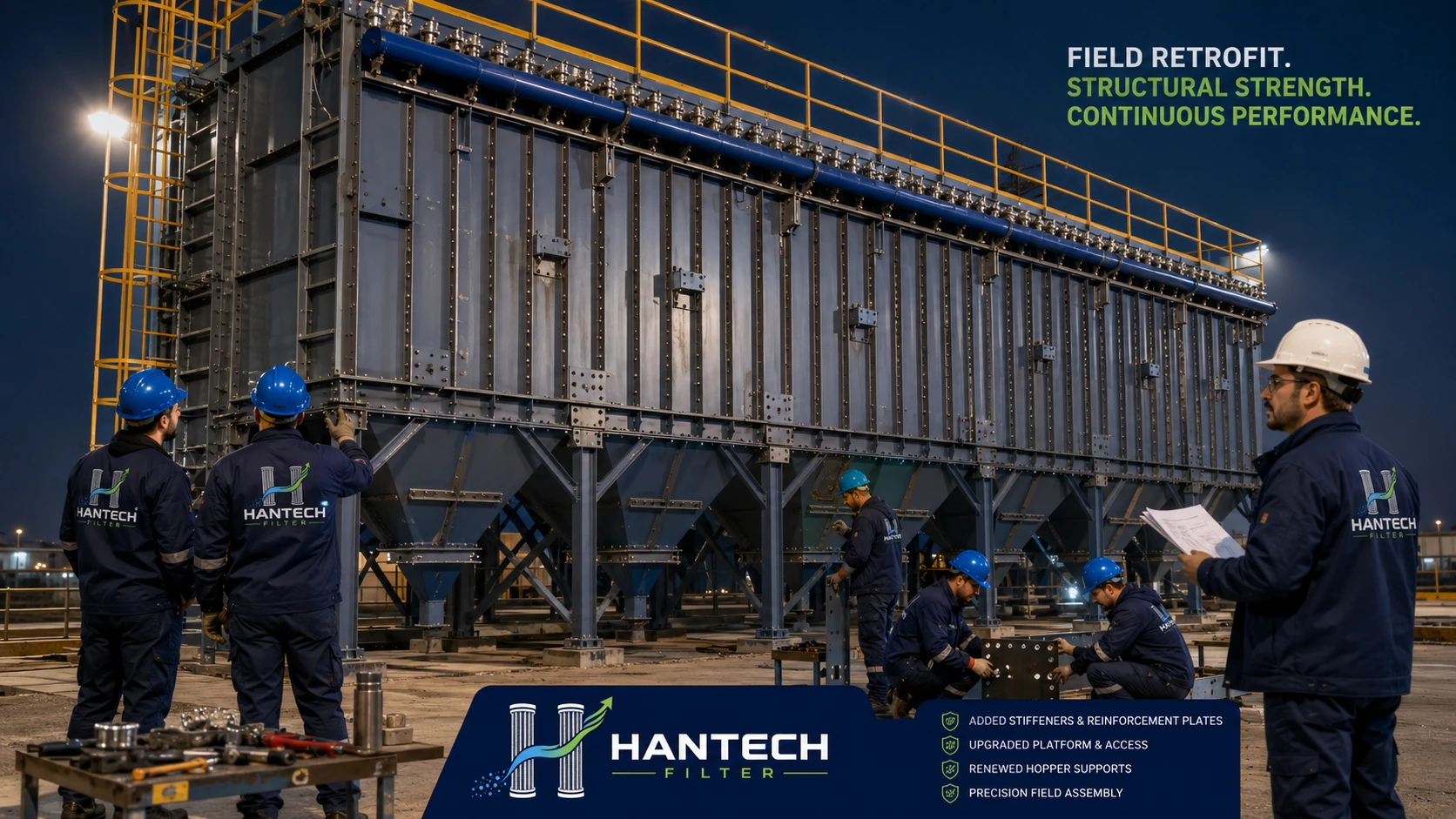
Baghouse filter renewal does not mean completely replacing the existing filter. On some sites, the system can be stabilized again with the right filter bag media, cages, pulse-jet valves, fan settings, hopper discharge, and inlet distribution revisions. On others, a new investment is the better choice because the housing volume, filter area, ductwork layout, or maintenance access can no longer keep up with the process capacity.
If this decision is made based on purchase price alone, two risks arise: an unnecessary new investment may be made, or spending continues piecemeal on a filter that has reached the end of its service life. In baghouse filter renewal and upgrade projects, Hantech Filter evaluates site data first, then mechanical condition, and then operating cost.
How Does It Work? Diagnostic Flow for the Retrofit Decision
The first step is naming the complaint: high dP, weak suction, stack dust, bag tearing, frequent valve failure, high energy use, or a maintenance access problem. The second step is measurement. Flow rate, fan static pressure, motor current, filter dP graph, pulse pressure, air tank recovery, leak points, and bag damage marks are all recorded. The third step is finding the root cause. Only then can the retrofit-versus-new-filter question be answered on technical grounds.
Retrofit or New Investment? Decision Matrix
| Status | Retrofit candidate | New investment candidate |
|---|---|---|
| Filter housing is sound | Inlet distribution, pulse cleaning, or bag/cage revision can be considered. | If housing volume is insufficient for process capacity, a new filter is required. |
| dP high | If the A/C ratio is at its limit, the media is wrong, the pulse system is weak, or there is a moisture problem, improvements can be made. | If the filter area is permanently insufficient, a housing enlargement or new investment is required. |
| Emission high | The filter bag top, snap-band, cage, leak point, and media can be tried as replacements. | Replacement is required if housing sealing and the clean/dirty chamber separation are structurally compromised. |
| High fan energy consumption | The fan operating point can be improved by reducing damper losses, duct losses, and dP. | If the fan and filter are both outside their capacity together, the system needs to be renewed. |
| Poor maintenance access | A platform, access door, and bag-change clearance can be added. | A new design is required if a safe maintenance area cannot be technically achieved. |
Parameters to Check During Field Measurement
If adding a new fan or a new filter to an existing line, it's not just motor power that needs checking -- the actual flow rate and static pressure operating point of the fan must be verified. A retrofit sometimes lowers the filter's dP; but if duct losses or an incorrect damper position persist, the expected increase in extraction won't be achieved.
Example Field Scenario: High dP After a Capacity Increase
Sample process data
- Process
- Cement mill filter
- Old flow rate
- 42,000 m³/h
- New target flow rate
- 58,000 m³/h
- Bag area
- 620 m²
- New A/C
- 58,000 / 60 / 620 = 1.56 m/min
- Symptom
- dP above 2,200 Pa, weak suction, frequent pulsing
In this scenario, simply replacing the bags is not the right first answer. A capacity increase may have left the filter area undersized. After reviewing inlet distribution, bag media, pulse system, and fan curve, two paths emerge: if increasing filter area or adding a module to the existing housing is possible, retrofit; if not, invest in a new baghouse filter. Hantech evaluates this decision together with the mechanical space available on site, downtime, and total operating cost.
Technical Improvements Possible Within a Retrofit
| Improvement / Recovery | What problem does it target? | Attention |
|---|---|---|
| Filter bag media and surface treatment | High dP, fine dust, emissions | Process humidity and chemistry must be verified. |
| Cage and venturi replacement | Filter bag wear, weak pulse effect | Cage OD and cell plate dimensions must be measured on site. |
| Pulse-jet system overhaul | Insufficient cleaning | Valve, tank, blow pipe, and control algorithm are addressed together. |
| Inlet distribution and inlet plate | Local filter bag tearing and abrasion | Flow direction and velocity variation should be measured. |
| Hopper, rotary valve, and screw conveyor arrangement | Dust accumulation and re-entrainment | Air leakage and capacity should be checked. |
| Fan and duct optimization | Energy, low suction, vibration | Calculated together with the filter dP chain. |
When Should a Retrofit Not Be Done?
I do not promise a fix based on bag and valve replacement alone at a site where the filter housing has suffered serious corrosion, cell-plate leaks are widespread, and process flow has far exceeded the original design. In that situation, a retrofit budget can turn into an expensive stopgap that only delays the decision for new investment.
Product and System Connections
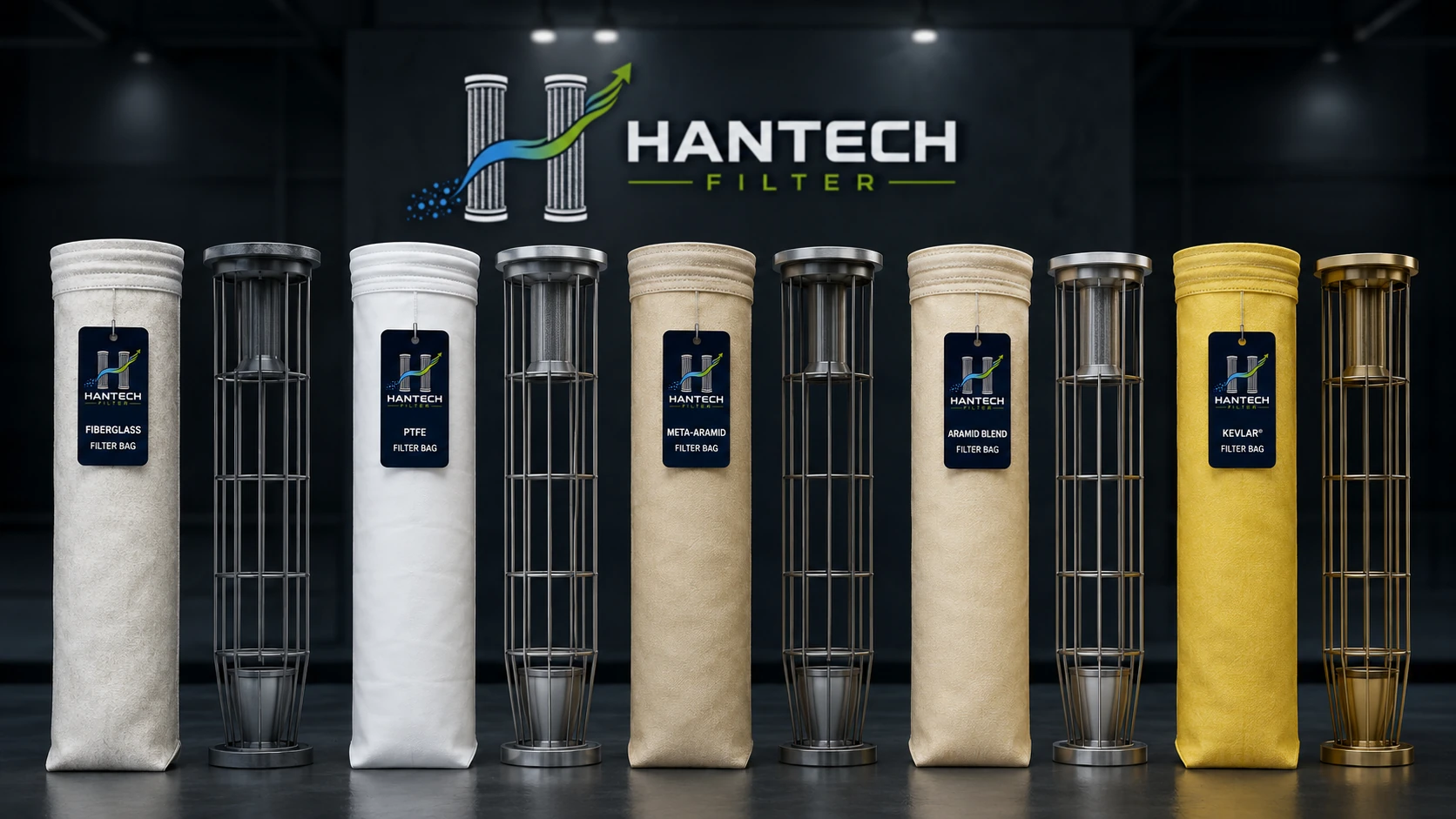
A retrofit decision usually involves more than one product family. Filter bags, filter cages, pulse-jet valves, rotary airlocks, and performance measurement can all be part of the same diagnostic package.
For related technical articles, you can read the pressure drop in baghouse filters, extending filter bag life, pulse-jet valve failure, and cyclone pre-separator guides together.
Information Required for a Quote
For a baghouse filter retrofit or new-investment evaluation, please provide photos of the existing filter, overall dimensions, bag diameter/length/quantity, filter area, fan nameplate, motor power, approximate flow rate, dP trend, stack emission results, process temperature, dust type, production capacity, recent maintenance records, number of valves, tank pressure, hopper discharge equipment, and any current complaints.
If you share this data through the quote form, Hantech Filter can first assess the retrofit potential and then the need for new investment, both technically and commercially. This way the decision is based not only on price but also on downtime risk and total operating cost.
Frequently Asked Questions
Does every high dP require a new filter investment?
No. High dP can result from the wrong bag media, insufficient pulsing, moisture, hopper discharge issues, or the fan operating point. The root cause must be identified first.
Can capacity be increased through a retrofit?
It can sometimes be done. If filter area, housing volume, fan capacity, and mechanical layout allow, an area increase or module addition can be considered.
When is a new investment the better choice?
If the housing is structurally weak, filter area is significantly undersized, maintenance access is unsafe, or the process has moved well beyond the original design, a new investment may be the better option.
Does production have to stop for retrofit work?
It depends on the scope. Bag/cage replacement, pulse system revision, or housing modification may require planned downtime. Downtime duration should be planned separately before the quotation.
Can Hantech provide a price before a site survey?
A preliminary quote can be prepared for basic parts using photos and dimensions; for a comprehensive retrofit versus new investment decision, field data and measurement give a more reliable result.